Forex Economic Calendar: How to Use It for Better Trading Decisions
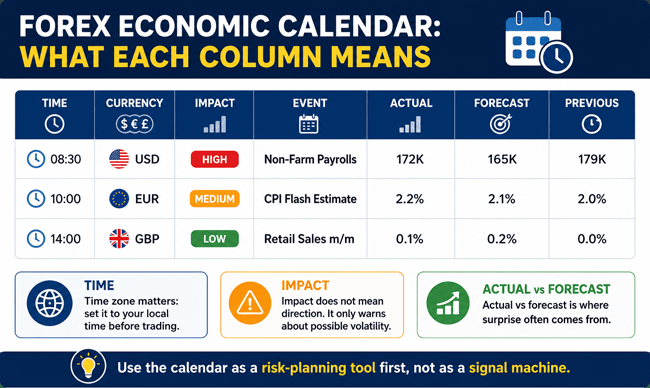
Figure 1: The basic anatomy of a forex economic calendar.
1. Introduction: The Calendar Is a Trader’s Weather Forecast
A forex economic calendar is a simple schedule of important economic announcements, central bank decisions, and public speeches that can move currency prices. Think of it like a weather forecast for the market. It does not tell you exactly where price will go, but it warns you when conditions may become stormy.
For a new trader, this one tool can prevent many painful mistakes. Many beginners open a trade, see price suddenly jump or crash, and later discover that Non-Farm Payrolls, inflation data, or an interest rate decision was released five minutes earlier. The problem was not always the strategy. The problem was trading without checking the news calendar.
This guide explains the forex economic calendar in plain English. You will learn what each part means, which events matter most, how experienced traders actually use it, what beginners should avoid, and how to build a realistic routine around it. The focus is honest and practical: no guaranteed profits, no hype, and no claim that news trading is easy.
2. What Is a Forex Economic Calendar?
A forex economic calendar is an online timetable that lists scheduled economic events by date and time. These events may include inflation reports, employment data, gross domestic product, retail sales, central bank rate decisions, meeting minutes, speeches from policymakers, and other releases that can influence currency markets.
The reason it matters is simple: currencies respond to expectations about a country’s economy and interest rates. If traders believe a central bank may raise interest rates, that currency may strengthen. If economic data is weak, traders may expect lower rates or slower growth, and the currency may weaken. The economic calendar helps traders see when this information is coming out.
A good calendar normally shows the time of release, the country or currency affected, the event name, the expected impact level, the previous result, the forecast, and the actual result once published. Some calendars also show historical charts, revisions, and links to official sources.
■ How an Economic Calendar Works
1. The market prepares before the number
Before a major release, analysts and institutions form expectations. These expectations become the forecast number shown on the calendar. For example, traders might expect U.S. jobs to increase by 165,000. If the actual number is close to 165,000, the market may react less because the result was already expected. If the number is far above or below forecast, the reaction can be sharper.
2. Price reacts to surprise, not only to good or bad news
Beginners often think, “good data means the currency must go up.” In real trading, the key question is: good compared to what? If the market expected excellent data and the result is only average, price can fall even though the headline still looks positive. This is why actual versus forecast is often more useful than actual alone.
3. The first move can be messy
Major news releases can create fast spreads, slippage, and whip-saw moves. Price may jump up, reverse down, and then settle in a third direction. Many experienced traders do not trade the first seconds of high-impact news. They wait for liquidity to return and for the market to show whether the move has follow-through.
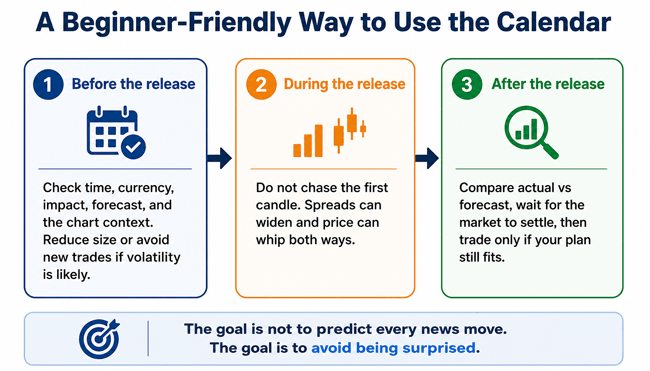
Figure 2: A simple before, during, and after routine for calendar events.
3. The Main Parts of a Forex Economic Calendar
| Calendar item | What it means | Beginner tip |
|---|---|---|
| Time | The scheduled release time. | Set the calendar to your own time zone. This prevents accidental trading right into news. |
| Currency/country | The economy connected to the data. | USD news can affect many pairs, not only EUR/USD or GBP/USD. |
| Impact level | A general warning about expected volatility. | High impact means “be careful,” not “buy” or “sell.” |
| Event name | The report or speech being released. | Learn the big events first: CPI, NFP, interest rates, GDP, PMI, retail sales. |
| Actual | The published number after release. | Compare it with forecast and previous, not in isolation. |
| Forecast | Market expectation before release. | A large gap between actual and forecast often matters more than the number itself. |
| Previous | The earlier reading. | Watch revisions. Sometimes the old number changes and affects the interpretation. |
4. Which Economic Events Usually Matter Most in Forex?
Not every calendar item deserves the same attention. Some releases are small and may barely move the market. Others can change interest-rate expectations and create strong volatility. The importance also depends on market context. If inflation is the main concern, CPI may move the market more than usual. If recession fears dominate, jobs and GDP may get extra attention.
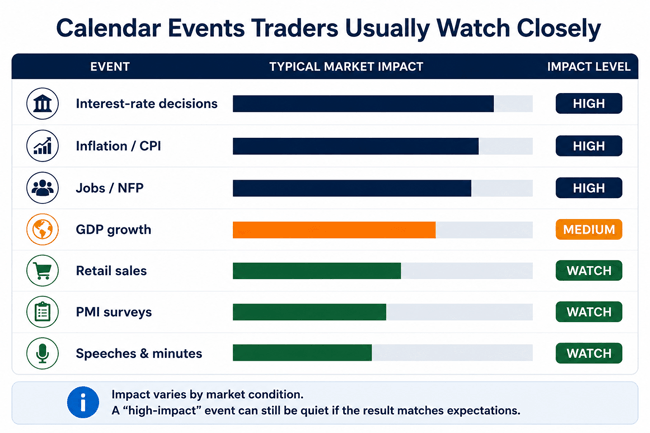
Figure 3: Commonly watched forex events. Actual impact depends on market context.
Interest rate decisions
Central bank rate decisions are among the most important forex events because interest rates influence capital flows. When one country offers higher expected returns, its currency can become more attractive. Traders watch not only the rate decision, but also the statement, press conference, and future guidance. The Federal Reserve notes that the FOMC normally holds eight scheduled meetings each year, with statements and minutes published around those meetings.
Inflation data, especially CPI
Inflation tells traders whether prices are rising too quickly or slowing down. The U.S. Bureau of Labor Statistics describes CPI as a measure of the average change over time in prices paid by urban consumers for a basket of goods and services. When inflation is hotter than expected, traders may expect tighter monetary policy. When it is softer, they may expect rate cuts or a less aggressive central bank.
Employment data and Non-Farm Payrolls
U.S. Non-Farm Payrolls, often called NFP, is one of the most watched employment reports in forex. It can affect the U.S. dollar, gold, indices, and bond yields. Traders watch the headline jobs number, unemployment rate, wage growth, and revisions. A strong jobs report can support the dollar if it raises rate expectations, but the reaction can be mixed if wages, revisions, or unemployment tell a different story.
GDP, retail sales, PMI, and trade data
GDP shows broad economic growth. Retail sales provide a window into consumer spending. PMI surveys can show whether business activity is expanding or contracting. Trade balance data can matter for export-driven economies. These events may not always create a dramatic spike, but they help shape the longer-term story behind a currency.
Speeches, meeting minutes, and political risk
Central bank speeches and meeting minutes can move markets when they change expectations. Political events, budgets, elections, and geopolitical shocks can also affect currencies, although they are not always as neatly scheduled as standard data releases. A calendar helps with scheduled events, but traders still need broader market awareness.
4. A Practical Example: Using the Calendar Before Trading EUR/USD
Imagine you are a beginner planning to trade EUR/USD during the London and New York overlap. Your technical setup shows price near a support level, and you are thinking about buying. Before entering, you check the economic calendar.
- You set the calendar to your local time zone.
- You filter for USD and EUR events.
- You notice U.S. CPI will be released in 25 minutes and it is marked high impact.
- The forecast is 0.2% month over month, while the previous number was 0.3%.
- You decide not to open a new trade before the release because spreads and volatility may increase.
When CPI is released, the actual number comes out at 0.4%, much higher than forecast. The U.S. dollar strengthens quickly and EUR/USD drops through the support level. If you had bought just before the release, your technical setup may have failed for a reason that was visible in advance. By checking the calendar, you avoided being trapped in a predictable risk window.
This example shows the most realistic use of the calendar for beginners: it is first a risk filter. You do not have to trade the news to benefit from the calendar. Avoiding a bad trade is also a trading skill.
5. How Beginners Can Use a Forex Economic Calendar Step by Step
Step 1: Choose a reliable calendar and set the time zone
Use a calendar that updates quickly and clearly shows actual, forecast, previous, currency, and impact. The first setting to check is time zone. Many beginner mistakes happen because the trader reads the correct event but the wrong local time.
Step 2: Filter only the currencies you trade
If you trade EUR/USD, watch EUR and USD events. If you trade GBP/JPY, watch GBP and JPY events, but also be aware of major USD events because the U.S. dollar influences global risk sentiment. Filtering keeps the calendar clean and easier to understand.
Step 3: Mark high-impact events before the trading day starts
Before trading, scan the day and mark the red-folder or high-impact events. Decide in advance whether you will avoid trading 15-30 minutes before the event, reduce position size, tighten risk rules, or wait until after the release. The exact buffer depends on your trading style and broker conditions.
Step 4: Read actual versus forecast
When the number is released, do not ask only whether it is good or bad. Ask whether it is above or below forecast, whether the previous number was revised, and whether the result changes the bigger central-bank story. The market often reacts to the surprise and to what that surprise means for future interest rates.
Step 5: Record what happened
Keep a small trading journal. Write the event name, forecast, actual, first market reaction, later reaction, spread behavior, and whether you followed your plan. Over time, this builds real experience. You start seeing which events matter for your pairs and which reactions are too messy for your style.
6. News Trading vs Calendar-Aware Trading
There is an important difference between trading news and being aware of news. News trading means trying to profit directly from the release. Calendar-aware trading means using the calendar to manage timing, risk, and expectations. Beginners are usually better served by becoming calendar-aware first.
| Approach | What it means | Best for |
|---|---|---|
| Calendar-aware trading | Monitoring upcoming economic events to avoid unexpected volatility and improve trade timing. | Beginners and conservative traders. |
| Post-news trading | Waiting for the news event to pass, then entering trades only after price action confirms direction. | Traders who prefer confirmation instead of reacting to initial spikes. |
| Direct news trading | Trading during or immediately before news releases, aiming to capture rapid market moves. | Experienced traders with strong risk control and execution awareness (slippage, spreads, volatility). |
7. Common Mistakes Beginners Make With Economic Calendars
- Thinking high impact means guaranteed big movement. Sometimes a high-impact event is quiet because the result matches expectations.
- Ignoring time zones and accidentally trading during a major release.
- Looking only at the headline number and ignoring forecast, previous reading, and revisions.
- Entering trades seconds before news because the setup looks good technically.
- Using huge leverage because “news will move fast.” Fast movement can help or hurt; leverage magnifies both.
- Following social media signals that promise certain outcomes for CPI, NFP, or FOMC. No one knows the exact market reaction in advance.
- Forgetting that spreads can widen and stop-loss orders can slip during volatile releases.
7. A Simple Daily Routine for New Traders
A beginner does not need to become an economist overnight. Start with a repeatable routine. Five minutes of preparation can protect you from many avoidable mistakes.
- Before the trading session, open the economic calendar.
- Filter for the currencies in your watchlist.
- Write down the high-impact events and their times.
- Decide your no-trade windows around major releases.
- After the release, wait for spreads and candles to normalize.
- Review whether the event changed the trend, broke a key level, or only caused noise.
- Log one lesson from the day in your trading journal.
8. How the Calendar Helps With Risk Management
The strongest benefit of a forex economic calendar is not prediction. It is risk management. It helps you know when normal market behavior may change. That matters for stop placement, position size, timing, and emotional control.
For example, a stop-loss that works during normal conditions may be too tight during a high-impact release. A breakout that looks clean may fail because the first move was only a liquidity spike. A broker spread that is normally small may widen around news. The calendar helps you prepare for these practical realities.
Many experienced traders use simple rules: no new trades just before red-folder events, no moving stop-losses during panic candles, no revenge trades after a news spike, and no increasing lot size to “make back” a loss. These rules sound basic, but they protect beginners from the most expensive emotional mistakes.
9. What the Calendar Cannot Do
A calendar cannot tell you the future. It cannot guarantee direction, profit, or a safe entry. It cannot protect you from poor position sizing, unregulated brokers, emotional trading, or lack of a plan. It also cannot show every risk because unexpected news can appear at any time.
This is why honest content about forex should avoid claims such as “sure-shot news strategy” or “guaranteed NFP profits.” Regulators warn that retail forex can be extremely risky, and the CFTC specifically cautions investors about too-good-to-be-true returns and forex fraud. The calendar is useful, but it is not a magic signal tool.
10. Best Practices for Using an Economic Calendar
- Use official sources when possible for major releases, such as central bank calendars and national statistics agencies.
- Check both the day ahead and the week ahead so you know when major events are coming.
- Focus on the currencies you trade, but stay aware of major USD events because they can affect global markets.
- Treat high-impact events as risk windows, not automatic opportunities.
- Compare actual, forecast, previous, and revisions before forming an opinion.
- Avoid over-leveraging around news. Volatility can create opportunity, but it also increases execution risk.
- Back-test or forward-test any news strategy on a demo account before risking real money.
- Keep records. Your own journal is often more useful than random online opinions.
11. Recommended Calendar Filters for Beginners
| Trader type | Currencies to focus on | Key events to watch | Simple rule |
|---|---|---|---|
| EUR/USD beginner | EUR, USD | CPI, NFP, FOMC, ECB decisions, GDP, PMI | Avoid opening new trades shortly before high-impact EUR or USD events. |
| Gold trader | USD (primary driver), global risk sentiment | CPI, NFP, FOMC, Fed speeches, yield-related data | Focus on USD news, as gold is highly sensitive to interest rate expectations and dollar strength. |
| Scalper | Traded pair currencies only | High-impact news releases and central bank speeches | Use wider no-trade buffers around news, since spreads and slippage affect short-term trades most. |
| Swing trader | Currencies in open positions | Weekly high-impact events and interest rate decisions | Be aware of events that could move price significantly while positions are open overnight or for days. |
■ Frequently Asked Questions
1. Is a forex economic calendar free?
Yes. Many brokers, financial websites, and data platforms provide free economic calendars. The quality varies, so compare speed, clarity, time-zone settings, and whether the calendar links to official sources.
2. Can beginners trade the news?
Beginners can study news reactions, but directly trading high-impact releases is difficult. Fast price movement, spread widening, slippage, and emotional decisions can make it risky. A safer starting point is using the calendar to avoid surprise volatility and then practicing post-news analysis.
3. Which news is most important for forex?
Interest-rate decisions, inflation data, employment reports, GDP, retail sales, PMI, and central bank speeches are commonly important. The most important event changes with market conditions. When inflation is the main market story, CPI can dominate. When labor-market weakness is the concern, jobs data can dominate.
4. How long before news should I stop trading?
There is no universal rule. Some traders avoid new trades 15 minutes before high-impact events. Others use 30-60 minutes around major releases such as NFP or central bank decisions. The safer answer is to test your own strategy and broker conditions, then set a written rule.
5. Does high impact always mean a big move?
No. High impact means the event has the potential to move markets. If the actual number matches expectations, the reaction may be small. If liquidity is thin or the result surprises the market, the reaction may be large.
6. What is the best economic calendar for forex trading?
The best calendar is the one you can read quickly and consistently. Look for accurate timing, a clean layout, impact filters, actual/forecast/previous data, time-zone control, and fast updates. For major U.S. releases and central bank decisions, it is also wise to check official sources such as the BLS and Federal Reserve.
■ Conclusion: Use the Calendar Before the Market Teaches You the Hard Way
A forex economic calendar is one of the simplest tools a trader can use, but it is also one of the most important. It helps beginners understand when the market may become volatile, which currencies may be affected, and why price can suddenly move without warning.
The best way to use it is practical and disciplined. Check it before trading. Understand actual versus forecast. Respect high-impact events. Avoid unrealistic promises. Keep a journal. Use the calendar to protect your capital first and to find opportunity second.
In forex, you cannot control the news, the spread, or the market reaction. But you can control whether you are prepared. That is why every trader should use a forex economic calendar.
Sources and Notes
- U.S. Bureau of Labor Statistics. Consumer Price Index information. BLS defines CPI as the average change over time in prices paid by urban consumers for a basket of goods and services.
- U.S. Bureau of Labor Statistics. Employment Situation release. BLS publishes monthly labor-market data including nonfarm payrolls and unemployment.
- Federal Reserve. FOMC meeting calendars and information. The Fed states that the FOMC normally holds eight scheduled meetings per year and publishes statements and minutes.
- U.S. Commodity Futures Trading Commission. Forex fraud and investor protection materials. The CFTC warns about unrealistic returns, offshore risks, and retail forex fraud.
- U.S. Securities and Exchange Commission. Investor Bulletin on forex trading for individual investors. The SEC warns forex trading can be very risky and is not appropriate for all investors.
Reader Advice: This article is provided for educational and informational purposes only and should not be considered financial, investment, or trading advice. Forex trading involves risk. Before making any trading decisions, take the time to study the forex market thoroughly, understand the risks, and evaluate whether trading is appropriate for your financial situation and experience. Always make informed decisions based on your own research, and consider seeking guidance from a qualified financial professional when needed.