How Inflation Affects Forex Markets and Currency Values: A Beginner's Guide
Quick answer: what inflation does to a currency
Inflation means prices are rising and the same amount of money buys less than before. In forex, inflation matters because a currency is not only a symbol on a chart; it represents purchasing power, interest-rate expectations, investor confidence, and the strength of an economy.
A simple rule beginners can remember is this: inflation can weaken a currency when it destroys purchasing power and makes people lose trust in that money. But inflation can also support a currency for a while if traders believe the central bank will raise interest rates aggressively. This is why forex sometimes reacts in a way that looks confusing at first. The market is not only asking, “Is inflation high?” It is asking, “What will the central bank do next, and will the economy handle it?”
1. What is inflation in very simple words?
Inflation is the general rise in prices across an economy. If groceries, rent, fuel, school fees, and transport costs keep rising, inflation is probably high. If your salary stays the same while prices rise, your real buying power falls. That loss of buying power is the heart of inflation.
For forex traders, inflation is important because every currency competes with other currencies. When one country has higher inflation than another, its currency may lose real value over time unless interest rates, productivity, exports, or investor confidence compensate for that weakness.
Common inflation terms beginners should know
| Term | Simple meaning | Why forex traders care |
|---|---|---|
| CPI | Consumer Price Index; a common measure of household price changes. | A major inflation report watched by currency traders. |
| Core inflation | Inflation excluding volatile items such as food and energy. | Often used to judge whether inflation pressure is sticky. |
| PPI | Producer Price Index; prices paid by producers. | Can signal future consumer inflation. |
| Real interest rate | Interest rate minus inflation. | Higher real returns can attract foreign capital. |
| Purchasing power | How much goods and services money can buy. | Falling purchasing power can reduce currency confidence. |
2. How inflation reaches the forex market
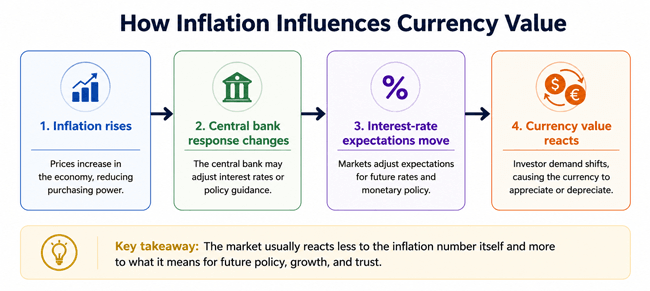
Figure 1: Inflation affects currency values through policy expectations, purchasing power, and confidence.
Inflation reaches the forex market through several connected channels. Beginners often focus only on the inflation number, but experienced traders usually care about the full chain of reaction.
- Prices rise. Consumers feel pressure and businesses may raise wages or prices again.
- The central bank reacts. It may raise interest rates, hold rates high, or warn markets that inflation is still a problem.
- Bond yields and rate expectations change. Investors compare the return they can earn in one currency with the return in another.
- Money moves across borders. If investors expect better returns or more stability, they may buy that country’s currency.
- The exchange rate changes. Currency pairs move as traders update their view of inflation, policy, growth, and risk.
3. Why high inflation can weaken a currency
High inflation can weaken a currency because it reduces purchasing power. If one country’s prices rise much faster than another’s, each unit of its money buys less in real terms. Over time, that can pressure the currency lower, especially if the country depends heavily on imported food, fuel, machinery, or technology.
Imagine Country A has 3% inflation and Country B has 12% inflation. If both countries offer similar interest rates, investors may prefer Country A because its money holds value better. In Country B, the higher inflation eats away at returns. That is why traders compare inflation with interest rates instead of looking at inflation alone.
4. Why high inflation can sometimes strengthen a currency
This is the part that confuses many beginners: a currency can rise after a high inflation report. The reason is interest-rate expectations. If inflation comes in hotter than expected, traders may believe the central bank will raise rates or keep rates high for longer. Higher rates can attract capital because investors may earn better returns on deposits, bonds, and money-market instruments in that currency.
For example, if U.S. inflation is higher than expected, the U.S. dollar may rise if traders think the Federal Reserve will become more hawkish. But the same inflation report could weaken the dollar if traders think inflation is hurting growth, damaging confidence, or forcing the central bank into a policy mistake. Context matters more than the headline number.
5. The real driver: expected inflation versus actual inflation
Forex markets are forward-looking. They often move before official policy changes happen. A currency pair may rise or fall because traders change their expectations, not because anything has officially changed yet.
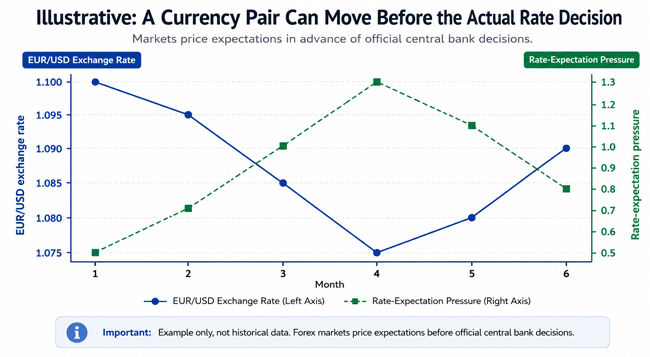
Figure 2: Forex prices often move on expectations before central banks act.
This is why a “good” or “bad” inflation number does not always produce the same market reaction. If everyone expected inflation to be 4.0% and the report shows 3.9%, the market may treat that as softer inflation. If everyone expected 3.0% and the number is 3.9%, the reaction may be very different.
6. Interest rates, inflation, and forex: the triangle beginners must understand
The relationship between inflation, interest rates, and forex is one of the most important ideas in currency trading. Central banks often raise interest rates to cool inflation. Higher rates can support a currency because they can make that currency more attractive to hold. But if rates rise too much, the economy may slow, debt costs may increase, and investors may worry about recession.
A beginner-friendly way to think about it is:
- Inflation tells traders how much pressure is building in the economy.
- Interest rates tell traders how the central bank is responding.
- Forex prices show how global investors judge the balance between return and risk.
7. Real interest rates matter more than headline rates
A country can have a high interest rate and still have an unattractive currency if inflation is even higher. That is why real interest rates matter. The rough formula is:
Currencies with better real returns often look more attractive to investors. However, traders also consider political stability, debt levels, capital controls, central bank credibility, and whether the exchange rate is freely traded.
8. Currency pairs: why inflation is always a comparison
In forex, you never trade a currency alone. You trade one currency against another, such as EUR/USD, GBP/USD, USD/JPY, or USD/PKR. That means inflation is always relative.
If inflation is high in the United States but even higher in Europe, EUR/USD may not rise simply because U.S. inflation is high. Traders compare both sides: U.S. inflation, European inflation, Federal Reserve policy, European Central Bank policy, growth, trade, and risk appetite.
| Situation | Possible central bank response | Typical currency reaction | Beginner lesson |
|---|---|---|---|
| Inflation high and central bank hawkish | Raises or keeps rates high | Currency may strengthen in the short term | Markets like higher expected returns. |
| Inflation high and central bank weak | Delays action or loses credibility | Currency may weaken | Trust matters. |
| Inflation falling faster than expected | May cut rates sooner | Currency may weaken | Lower future returns can reduce demand. |
| Inflation low with strong growth | Can keep policy balanced | Currency may stay stable or rise | Stability attracts capital. |
9. Imported inflation and currency depreciation
Currency weakness can also create more inflation. This is called exchange-rate pass-through. When a local currency falls, imported goods become more expensive. Fuel, wheat, cooking oil, electronics, raw materials, and machinery can all cost more in local currency. Businesses then pass some of those higher costs to consumers.
This is especially important for emerging markets and import-dependent economies. If the local currency drops sharply, inflation may rise even if local demand is weak. A shopkeeper importing goods may not care that consumers are already struggling; if replacement stock costs more, prices must rise or the business loses money.
10. Developed markets versus emerging markets
Inflation affects all currencies, but the impact is usually stronger in emerging markets because investors may demand a larger safety premium. Developed-market currencies such as the U.S. dollar, euro, yen, and pound are often backed by deeper bond markets, stronger institutions, and higher liquidity. Emerging-market currencies can move more sharply when inflation rises because traders worry about reserves, debt, political pressure, import bills, and central bank credibility.
| Area | Developed-market currencies | Emerging-market currencies |
|---|---|---|
| Liquidity | Usually very deep | Can be thinner, especially in stress |
| Inflation credibility | Central banks often have stronger credibility | Credibility varies widely |
| Pass-through from currency weakness to prices | Often lower and slower | Often higher and more visible |
| Risk reaction | May attract safe-haven flows | Can face capital outflows during fear |
11. What beginners should watch before trading inflation news
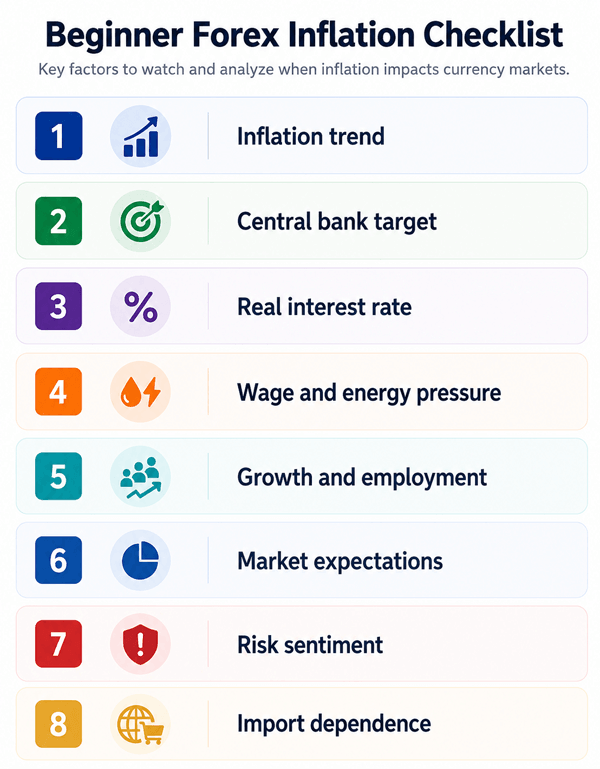
Figure 3: A practical checklist for reading inflation through a forex lens.
A beginner should not trade inflation news only because the number is higher or lower. The better habit is to read the market setup before the news. Ask these questions:
- What did the market expect? The surprise is usually more important than the number alone.
- Is inflation moving toward or away from the central bank target?
- Is the central bank already hawkish, or is the market expecting rate cuts?
- Is growth strong enough to handle higher rates?
- Is the currency already overbought or oversold before the report?
- Are there other major events the same week, such as central bank speeches, employment data, or geopolitical risk?
■ How traders use inflation data in practice
Traders use inflation data in different ways depending on their time frame. A day trader may care about the first 5 to 30 minutes after a CPI release. A swing trader may care about how inflation changes the next central bank meeting. A long-term investor may care about whether inflation is damaging a country’s real purchasing power over months or years.
1. News trading
Some traders try to trade the immediate reaction after CPI or central bank news. This is risky because spreads can widen, price can spike in both directions, and slippage can be large. Beginners should be very careful with leveraged forex trading during major data releases.
2. Trend confirmation
A safer approach for many beginners is to use inflation data as confirmation. For example, if a currency is already trending higher because its central bank is hawkish, another strong inflation report may support the trend. The trader still needs a plan for entry, stop loss, and risk size.
3. Carry trade thinking
In a carry trade, traders may buy a higher-yielding currency and sell a lower-yielding one. Inflation matters because high nominal yield is not enough. The trader wants to know whether the high yield is a reward for stability or a warning sign of inflation and currency risk.
■ A simple beginner case study
Suppose EUR/USD is trading at 1.0800 before a U.S. inflation report. Analysts expected U.S. CPI to rise 3.0% year over year, but the report shows 3.5%.
- First reaction: traders may buy USD because they expect the Federal Reserve to keep rates higher for longer.
- EUR/USD may fall because USD is the quote currency and a stronger USD pushes EUR/USD lower.
- Second reaction: if the market worries high inflation will hurt U.S. growth, the move may reverse.
- Best beginner lesson: do not chase the first candle. Wait for spreads to normalize and look for confirmation.
Now imagine the same report comes after several months of weak U.S. employment and falling retail sales. The market may see high inflation as “bad inflation” rather than “hawkish inflation.” In that case, the currency reaction could be smaller or even opposite. This is why context is everything.
■ Common beginner mistakes
- Thinking high inflation always weakens a currency. It may strengthen the currency if it increases expected interest rates.
- Ignoring the other side of the pair. EUR/USD depends on both euro and dollar factors.
- Trading the headline without checking forecasts. Markets react to surprises, not just numbers.
- Using too much leverage during news. Inflation reports can create fast, messy moves.
- Confusing short-term reaction with long-term value. A currency may spike today and weaken over months.
- Following social media signals without understanding the economic reason behind the trade.
■ Practical risk management for inflation-related forex trades
Risk management is not optional in forex. Inflation news can be exciting, but excitement is not a trading plan. A beginner-friendly approach is to decide the maximum loss before entering the trade. Many experienced traders risk only a small percentage of their account on one idea. They also avoid increasing position size just because they feel “sure.”
- Use a stop loss that fits market volatility, not your emotions.
- Avoid opening a large leveraged position seconds before CPI unless you fully understand slippage risk.
- Check spreads on your trading platform around news time.
- Record every trade in a journal: inflation forecast, actual data, market reaction, entry, exit, and lesson.
- Use a regulated forex broker and understand whether you are trading spot forex, CFDs, futures, or another product.
■ Best tools for following inflation and forex
Beginners do not need expensive tools at first. A clean economic calendar, central bank websites, official statistics pages, and a reliable charting platform are enough to learn the basics. Paid forex signals are not a replacement for understanding inflation, interest rates, and risk management.
- Economic calendar: use it to track CPI, PPI, employment, retail sales, and central bank meetings.
- Central bank statements: read the tone. Words like persistent, restrictive, data-dependent, and upside risks can move markets.
- Bond yields: rising yields can support a currency when they reflect stronger expected returns.
- Currency strength tools: helpful for comparing currencies, but not a full trading system.
- Trading journal: the most underrated forex education tool for beginners.
■ Helpful facts that make the topic easier
- Forex is relative: every currency pair compares two economies.
- Inflation hurts purchasing power, but central bank response can change the short-term currency reaction.
- Real interest rates often matter more than nominal interest rates.
- Currency depreciation can itself create inflation through more expensive imports.
- Emerging-market currencies can be more sensitive to inflation shocks and capital outflows.
- The market often moves before official rate decisions because traders price expectations early.
■ Frequently asked questions
1. Does inflation always make a currency weaker?
No. High inflation can weaken a currency over time by reducing purchasing power. But in the short term, it can strengthen a currency if traders expect higher interest rates.
2. Why does the dollar sometimes rise after high inflation?
Because traders may expect the Federal Reserve to keep interest rates higher for longer, making dollar assets more attractive.
3. What is the most important inflation report for forex?
For many major currencies, CPI is the most watched inflation release. Core CPI, PPI, wage growth, and central bank inflation forecasts are also important.
4. Should beginners trade CPI news?
Most beginners should be careful. CPI can create fast spikes, wider spreads, and slippage. It is often better to study the reaction first or practice on a demo account.
5. What is exchange-rate pass-through?
It is the process where currency depreciation makes imported goods more expensive, and those higher import costs later show up in consumer prices.
6. How can I use inflation in a forex strategy?
Use inflation to understand the bigger bias: whether a central bank may raise, hold, or cut rates. Then combine that view with price action, risk management, and a clear trade plan.
■ Conclusion
Inflation affects forex markets because it changes purchasing power, central bank policy, real returns, import costs, and investor confidence. The beginner mistake is to look for one fixed rule. The better approach is to ask: Is inflation rising or falling? Was it expected? What will the central bank do? Are real returns improving or worsening? Is the economy strong enough to handle higher rates?
Once you understand those questions, inflation stops being a confusing news headline and becomes a practical tool for reading currency values. The goal is not to predict every candle. The goal is to understand why a currency may strengthen, weaken, or reverse when inflation changes.
Sources and further reading
- Bank for International Settlements: Effective exchange rates overview. Used for understanding nominal and real effective exchange-rate concepts.
- Federal Reserve: H.10 foreign exchange rates and H.15 selected interest rates. Used for official examples of exchange-rate and interest-rate data sources.
- International Monetary Fund: research on exchange-rate pass-through to inflation. Used for the concept that currency depreciation can feed into consumer prices.
- Federal Reserve Economic Data (FRED): definitions and data series for effective federal funds rate and real broad effective exchange rates.
Reader Advice: This article is provided for educational and informational purposes only and should not be considered financial, investment, or trading advice. Forex trading involves risk. Before making any trading decisions, take the time to study the forex market thoroughly, understand the risks, and evaluate whether trading is appropriate for your financial situation and experience. Always make informed decisions based on your own research, and consider seeking guidance from a qualified financial professional when needed.