Bad Financial Habits That Keep People Poor
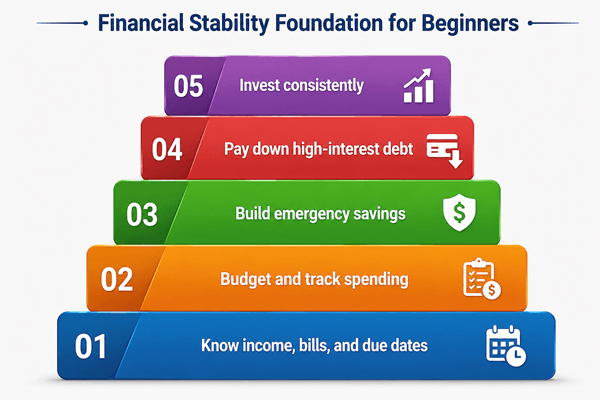
Figure: A beginner-friendly financial foundation starts with awareness and budgeting before debt payoff, savings, and investing.
Many people assume poverty or money stress is caused only by low income. Income matters a lot, but habits also matter. Two people can earn the same salary and end up in very different financial positions because of how they spend, save, borrow, plan, and respond to financial pressure.
Bad financial habits are repeated money behaviors that make it harder to build stability. They often feel small in the moment: buying something you did not plan for, paying only the minimum on a credit card, ignoring a bill, or avoiding your bank balance. Over time, these habits can create a cycle of debt, stress, missed opportunities, and limited choices.
This article explains the most common bad financial habits that keep people poor or financially stuck. More importantly, it shows how to fix them with realistic, beginner-friendly steps. The goal is not to shame anyone. Money problems are often linked to low wages, family pressure, emergencies, inflation, limited education, and unexpected life events. But even when circumstances are difficult, better habits can protect more of your income and help you move forward.
Quick Answer: What Financial Habits Keep People Poor?
The most damaging financial habits include spending without a plan, living beyond your income, relying on high-interest debt, not saving for emergencies, ignoring bills, buying things to impress others, delaying financial education, and failing to track progress. These habits keep people poor because they reduce cash flow, increase debt, create stress, and prevent long-term wealth building.
In simple terms, these are money habits that keep you broke because they weaken cash flow, reduce savings, increase consumer debt, and delay wealth building. The fastest improvement usually comes from tracking spending, stopping new high-interest borrowing, paying bills on time, and creating a small emergency savings cushion.
■ Bad Financial Habits vs. Good Financial Habits
| Bad habit | Why it hurts | Better habit |
|---|---|---|
| Spending before planning | Money disappears before important needs are covered. | Create a simple monthly budget before spending. |
| Paying only debt minimums | Interest grows and debt lasts longer. | Pay more than the minimum when possible and target high-interest debt first. |
| No emergency fund | Small problems become debt. | Save a starter emergency fund, even slowly. |
| Impulse buying | Short-term pleasure replaces long-term goals. | Use a waiting period before non-essential purchases. |
| Ignoring money problems | Late fees, penalties, and stress increase. | Review accounts and bills weekly. |
| Lifestyle inflation | Raises disappear into higher spending. | Save part of every raise before upgrading lifestyle. |
1. Spending Without a Budget
A budget is not a punishment. It is a plan for your money. Without a budget, spending decisions are made one purchase at a time, often based on mood, pressure, convenience, or habit. This makes it easy to run out of money before the month ends.
For example, imagine someone earns $1,500 per month. They pay rent and utilities but do not track groceries, transport, subscriptions, snacks, and small online purchases. By the third week, they are short on cash and use a credit card. The problem may not be one large purchase. It may be dozens of small unplanned expenses.
How to fix it:
- Write down your monthly take-home income.
- List fixed needs first: rent, utilities, basic food, transport, insurance, debt payments, school fees, and essential family support.
- Set limits for flexible categories such as eating out, clothing, entertainment, and gifts.
- Choose a budgeting method you can actually follow, such as the 50/30/20 rule, zero-based budgeting, or a simple envelope system.
- Review your budget once a week instead of waiting until the end of the month.
2. Living Above Your Means
Living above your means does not always look dramatic. It can be as simple as rent, transport, food delivery, subscriptions, and loan payments adding up to more than your monthly take-home pay.
Living above your means happens when your lifestyle costs more than your income can safely support. This can happen at any income level. The warning sign is simple: you regularly need debt, borrowed money, or unpaid bills to maintain your normal lifestyle.
Common examples include renting a home that is too expensive for your income, buying a car with payments you can barely afford, upgrading your phone every year, taking vacations on credit, or spending heavily on social events while falling behind on savings.
Living above your means keeps people financially stuck because it leaves no margin. A small emergency becomes a crisis. A missed paycheck becomes a disaster. Even a raise does not help if spending rises immediately.
How to fix it:
- Measure affordability by monthly cash flow, not by whether you can make the minimum payment.
- Separate needs, wants, and status purchases.
- Use raises and bonuses to build savings or reduce debt before increasing lifestyle spending.
- Avoid long-term commitments for short-term emotions, especially car loans, rent, and installment plans.
3. Relying on High-Interest Debt
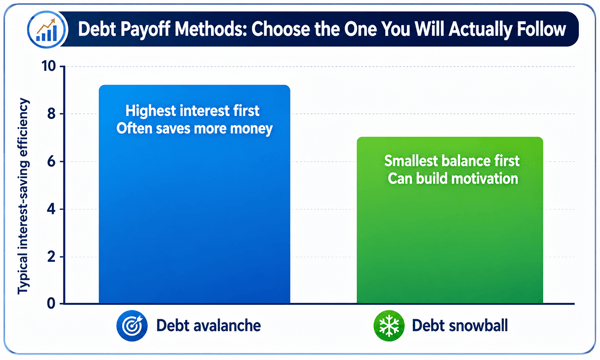
Figure: The debt avalanche method usually targets the highest interest first, while the debt snowball method targets the smallest balance first for motivation.
Practical warning: High-interest consumer debt is especially harmful because interest charges reduce future cash flow. Even when the monthly payment looks small, the total cost can become much larger over time.
Debt is not always bad. A reasonable mortgage, student loan, or business loan may help build long-term value when managed carefully. The dangerous habit is relying on high-interest debt for normal living costs or impulse purchases.
Credit cards, payday loans, cash advances, buy-now-pay-later plans, and informal borrowing can become expensive when used repeatedly. High interest means you pay more for the same item, and part of your future income is already committed before you earn it.
| Debt behavior | Short-term feeling | Long-term result |
|---|---|---|
| Using credit for groceries because the budget is short | Temporary relief | Next month starts with less available income. |
| Paying only the minimum | Payment feels affordable | Debt may last much longer and cost far more. |
| Taking a new loan to pay an old loan | Pressure is delayed | Debt cycle becomes harder to escape. |
| Buying wants on installment | Purchase feels easy | Future cash flow becomes crowded. |
How to fix it:
- Stop adding new high-interest debt unless it is a true emergency.
- List every debt, balance, interest rate, and minimum payment.
- Choose a repayment strategy: debt avalanche for highest interest first, or debt snowball for smallest balance first.
- Call lenders early if you are struggling. Ask about hardship plans, lower rates, or payment arrangements.
- Build a small emergency fund while paying debt so every surprise does not become new borrowing.
4. Not Having an Emergency Fund
An emergency fund is money set aside for unexpected but necessary expenses, such as a medical bill, urgent travel, job loss, car repair, home repair, or temporary income drop. Without emergency savings, people often use debt for every surprise.
A common misconception is that an emergency fund must be large before it matters. It does not. Even a small fund can prevent a small problem from becoming a debt problem. A starter goal of $500 to $1,000, or one month of essential expenses, can make a meaningful difference. After that, many people work toward three to six months of essential expenses, depending on income stability and family needs.
How to fix it:
- Open a separate savings account if possible, so the money is not mixed with daily spending.
- Automate a small transfer on payday, even if it is only a modest amount.
- Save windfalls, refunds, bonuses, or extra income until the starter fund is complete.
- Use the emergency fund only for real needs, not sales, upgrades, or planned expenses.
5. Ignoring Bills, Bank Balances, and Debt Statements
Avoiding money problems is understandable. Looking at a low balance or unpaid bill can feel stressful. But avoidance usually makes the problem worse. Late fees, overdraft fees, penalties, service disconnections, damaged credit, and collection calls often begin when bills are ignored.
The habit to build is financial awareness. You do not need to love spreadsheets. You simply need to know what is coming in, what is going out, and what is due soon.
Weekly money checkup:
- Check your bank balance and recent transactions.
- Review bills due in the next 7 to 14 days.
- Update your budget categories.
- Check debt balances and minimum payments.
- Look for subscriptions, fees, or charges you do not recognize.
This habit takes 15 to 30 minutes per week, but it can prevent expensive mistakes.
6. Impulse Spending and Emotional Buying
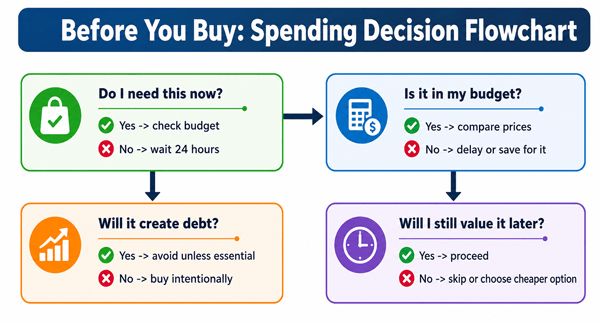
Figure: A quick decision process can reduce impulse purchases without removing all enjoyment from life.
Behavioral finance tip: The goal is not to become emotionless with money. The goal is to create a pause between emotion and payment so the decision is made by your plan, not only by stress, boredom, or pressure.
Impulse spending happens when you buy without planning. Emotional buying happens when you spend to manage stress, sadness, boredom, insecurity, celebration, or social pressure. These purchases may feel good for a short time but often create regret later.
Common triggers include online sales, payday excitement, social media, boredom, anger, loneliness, and pressure from friends or family. The key is not to remove all enjoyment from life. The key is to make spending intentional.
How to fix it:
- Use a 24-hour waiting rule for small wants and a 7-day waiting rule for larger purchases.
- Keep a written wish list instead of buying immediately.
- Unsubscribe from promotional emails and remove saved card details from shopping apps.
- Create a small guilt-free spending category so you can enjoy life without damaging your goals.
- Ask: Would I still want this if nobody saw it?
7. Trying to Look Rich Instead of Becoming Financially Stable
One of the most expensive bad financial habits is spending to impress people. This can include designer clothing, expensive phones, luxury cars, large weddings, status vacations, restaurant bills, and social media lifestyle spending.
The problem is not buying nice things. The problem is buying them before your foundation is strong. Looking wealthy can quietly destroy actual wealth if it creates debt, stress, and no savings.
| Looks rich | Builds stability |
|---|---|
| Financing a luxury car with a tight payment | Driving a reliable car you can comfortably afford |
| Posting expensive trips paid by credit card | Taking affordable trips after saving in advance |
| Buying brands to impress others | Buying quality items that fit your budget |
| Spending a raise immediately | Saving and investing part of every raise |
How to fix it:
- Define success privately, not through other people's opinions.
- Delay lifestyle upgrades until savings, debt, and cash flow are healthy.
- Remember that many people who look rich are also financially stressed.
8. Lifestyle Inflation After Every Raise
Lifestyle inflation means spending more as soon as income increases. A raise, bonus, promotion, or business growth should improve your financial position. But if every increase turns into a bigger apartment, newer car, more subscriptions, and more dining out, your financial stress may stay the same.
The simple rule is to decide in advance what will happen when income rises. For example, you might save 50% of every raise, use 30% for debt repayment, and enjoy 20% guilt-free. The exact numbers can change, but the habit matters: capture part of the increase before it disappears.
9. Not Tracking Small Expenses
Small expenses are not the enemy. The problem is invisible spending. Daily snacks, rideshares, delivery fees, app subscriptions, bank fees, and small online purchases can quietly consume money that could have paid debt or built savings.
A useful exercise is to track every expense for 30 days. Do not judge yourself during the tracking period. Just observe. At the end, group expenses into categories and ask which ones actually improved your life.
Simple example:
| Expense | Amount | Monthly total if repeated |
|---|---|---|
| Coffee or snack | $4 per weekday | About $80 per month |
| Delivery fee and tip | $8 twice per week | About $64 per month |
| Unused subscription | $12 per month | $144 per year |
| Bank/late fee | $25 twice per month | $50 per month |
The goal is not to shame small pleasures. It is to choose them consciously and cut the ones that do not matter.
10. Paying Yourself Last
Paying yourself last means you wait to save whatever is left after spending. For many people, nothing is left. Paying yourself first means saving a planned amount as soon as income arrives, before money disappears into daily expenses.
This habit works because it treats saving like a real bill. Even a small automatic transfer builds consistency. If your income is irregular, save a percentage of each payment instead of a fixed amount.
How to fix it:
- Start with a realistic amount you can maintain.
- Automate the transfer on payday.
- Increase the amount after debt is reduced or income rises.
- Keep savings separate from spending money.
11. Depending on One Income Source Without a Backup Plan
A single income source can be risky, especially if your job, business, or industry is unstable. Not everyone can immediately create a second income, and side hustles are not always realistic. But having no backup plan can make financial shocks more damaging.
A backup plan may include improving job skills, keeping your resume updated, building professional contacts, creating a small side income, saving an emergency fund, or learning a marketable skill. The goal is resilience, not overwork.
12. Avoiding Financial Education
Many bad money decisions happen because people were never taught how money works. Financial education helps you understand budgeting, interest, debt, credit, insurance, taxes, investing, retirement planning, and fraud prevention.
You do not need to become an expert overnight. Learn one topic at a time. Start with budgeting and debt. Then learn emergency savings, credit basics, insurance, investing, and retirement planning. The more you understand, the harder it becomes for bad advice, scams, and emotional decisions to control your money.
13. Not Setting Financial Goals
Without clear goals, money decisions become random. A financial goal gives your budget a purpose. It turns sacrifice into progress. Instead of saying, "I need to spend less," you can say, "I am saving $1,000 for emergencies," or "I am paying off this credit card in six months."
Good financial goals are specific, measurable, realistic, and time-based. They should also match your actual life, not someone else's lifestyle.
| Weak goal | Better goal |
|---|---|
| Save more money | Save $600 in 6 months by setting aside $100 per month. |
| Pay off debt | Pay an extra $75 per month toward the highest-interest card. |
| Spend less | Reduce food delivery from 4 times a week to 1 time a week. |
| Become rich | Build a $1,000 emergency fund, pay off consumer debt, then invest monthly. |
14. Making Money Decisions Without Comparing Options
Poor financial decisions often happen when people accept the first offer: the first loan, first insurance policy, first phone plan, first apartment, or first car financing deal. Comparing options can save a large amount of money over time.
Before making a major financial decision, compare total cost, interest rate, fees, contract length, penalties, and flexibility. A lower monthly payment is not always cheaper if the term is longer or fees are higher.
15. Falling for Get-Rich-Quick Schemes
When money is tight, promises of fast wealth can be tempting. Scams and risky schemes often use urgency, secrecy, emotional stories, celebrity images, fake testimonials, or guaranteed returns. Real wealth building usually takes time, skill, patience, and risk management.
Warning signs:
- Someone promises high returns with little or no risk.
- You are pressured to act immediately.
- The opportunity is hard to explain in simple words.
- You must recruit others to make money.
- You are told not to ask questions or not to tell family members.
- The seller makes money even if you lose money.
A safer rule: if you do not understand how the money is made, do not invest.
16. Neglecting Health, Insurance, and Risk Planning
Financial stability is not only about spending and saving. It also depends on protecting yourself from large risks. Medical emergencies, disability, accidents, theft, legal problems, and family crises can destroy progress if there is no plan.
Depending on your country and situation, important protections may include health insurance, life insurance for dependents, disability coverage, emergency savings, basic legal documents, and safe record keeping. The right protection depends on your life stage and responsibilities.
17. Not Talking About Money With Family or Partners
Money stress often grows when families avoid honest conversations. Couples may hide debt. Parents may overextend themselves for adult children. Young adults may not understand household expenses. Relatives may expect support that the budget cannot handle.
Healthy money conversations are respectful and practical. They focus on limits, priorities, shared goals, and responsibilities. For couples, regular money meetings can reduce conflict and prevent surprises. For families, clear boundaries can protect both relationships and finances.
18. Believing That Small Progress Does Not Matter
Many people give up because progress feels slow. They think saving $10, paying an extra $20 on debt, or skipping one unnecessary purchase does not matter. But financial change is built through repeated small decisions. Small progress matters because it builds proof, confidence, and momentum.
You do not need to fix everything at once. Start with one habit. Then add another. Financial stability is usually built gradually, not instantly.
■ The Bad Financial Habit Loop
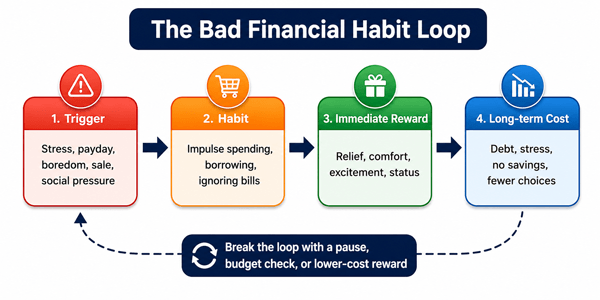
Figure: The loop shows how a trigger can lead to a money habit, a short-term reward, and a long-term financial cost. A pause can interrupt the pattern.
Many harmful money behaviors follow a loop. Understanding the loop helps you break it.| Stage | What happens | How to interrupt it |
|---|---|---|
| Trigger | Stress, payday, boredom, social pressure, sale, emergency, or fear. | Notice the trigger and pause before acting. |
| Habit | Impulse purchase, borrowing, ignoring bills, or spending to feel better. | Use a rule: wait, check budget, or talk to someone trusted. |
| Immediate reward | Relief, excitement, comfort, status, or avoidance. | Replace with a lower-cost reward or planned spending. |
| Long-term cost | Debt, stress, no savings, regret, or fewer choices. | Review consequences weekly and adjust the plan. |
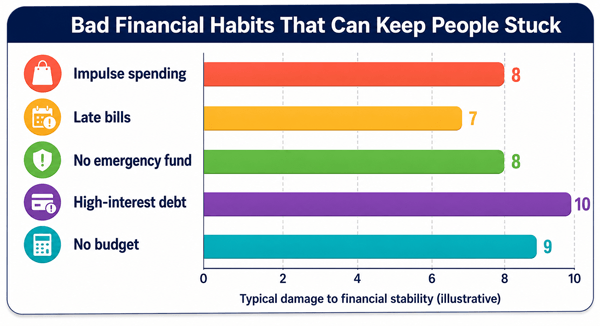
■ Which Bad Habits Usually Cause the Most Damage?
The chart below is illustrative, not a scientific ranking. It shows how certain habits often harm financial stability because they affect debt, cash flow, savings, and stress at the same time.
■ How to Replace Bad Financial Habits With Better Ones
Changing money habits is easier when you work in a clear order. The steps below are practical for beginners.
- Face the numbers. List your income, bills, debts, savings, and essential expenses. You cannot improve what you cannot see.
- Build a simple budget. Use broad categories first. You can make it more detailed later.
- Stop the biggest leak. Identify the habit causing the most damage, such as late fees, impulse shopping, or credit card interest.
- Create a starter emergency fund. Even a small cushion reduces panic borrowing.
- Pay down high-interest debt. Use a clear repayment method and avoid adding new debt.
- Automate good habits. Automate savings, bill reminders, and debt payments where possible.
- Review weekly. A weekly checkup is more useful than a perfect plan you never revisit.
- Improve income when possible. Better habits protect money, but income growth can speed progress.
■ 30-Day Action Plan to Break Bad Financial Habits
| Time period | Focus | Action steps |
|---|---|---|
| Days 1-3 | Awareness | Write down income, bills, debts, and account balances. Do not judge; just collect facts. |
| Days 4-7 | Spending review | Track all spending and identify the top three money leaks. |
| Week 2 | Budget setup | Create a simple budget and set limits for flexible categories. |
| Week 3 | Debt and bills | Set due-date reminders, stop late fees, and choose a debt payoff strategy. |
| Week 4 | Savings habit | Open or separate an emergency fund and automate a small transfer. |
| End of month | Review | Compare your plan with reality and adjust for next month. |
■ Common Misconceptions About Bad Financial Habits
Misconception 1: Poor people are poor only because of bad habits.
This is not true. Low wages, unemployment, illness, family responsibilities, discrimination, inflation, housing costs, and emergencies can all affect financial stability. Habits are only one part of the picture. However, improving habits can still help people protect more of what they earn.
Misconception 2: Budgeting means you cannot enjoy life.
A good budget includes enjoyment. The purpose is to make sure enjoyment does not destroy essentials, savings, or debt repayment.
Misconception 3: You need a high income before you can save.
A higher income helps, but the habit of saving can start small. The first goal is consistency, not a huge amount.
Misconception 4: Debt is normal, so it is not a problem.
Some debt can be manageable, but high-interest consumer debt can trap future income. Normal does not always mean healthy.
Misconception 5: Investing will fix bad money habits.
Investing is important for long-term wealth, but it cannot fully solve overspending, high-interest debt, no emergency savings, or poor planning. A strong foundation comes first.
■ When Bad Financial Habits Are Not the Whole Problem
Sometimes people do everything responsibly and still struggle because income is too low or expenses are too high. In that case, habit change alone may not be enough. The solution may also require income growth, job training, public benefits, debt counseling, community support, moving to lower-cost options, negotiating bills, or seeking professional advice.
A balanced approach is best: improve habits where you have control, and also look for structural solutions that increase income or reduce unavoidable costs.
■ Practical Checklist: Signs You Need to Change Money Habits
- You regularly run out of money before payday.
- You do not know where your money went last month.
- You use debt for normal expenses.
- You pay bills late even when income was available earlier.
- You avoid checking balances or statements.
- You have no emergency savings.
- You buy things to reduce stress or impress others.
- Your income increased, but your savings did not.
- You feel constant anxiety about money but do not have a written plan.
■ Frequently Asked Questions
1. What are the worst financial habits?
The worst financial habits are usually spending without a budget, using high-interest debt, paying bills late, having no emergency fund, ignoring debt, and living above your means. These habits are damaging because they reduce cash flow and make future progress harder.
2. Can bad financial habits keep someone poor even if they earn a good income?
Yes. A high income can be wasted through lifestyle inflation, expensive debt, poor planning, and status spending. Income helps, but habits determine how much of that income becomes savings, security, and wealth.
3. How do I stop living paycheck to paycheck?
Start by tracking expenses, creating a basic budget, cutting the biggest money leaks, avoiding new debt, building a starter emergency fund, and looking for ways to increase income. The first goal is to create breathing room between income and expenses.
4. Should I save money or pay off debt first?
It often makes sense to build a small emergency fund first, then focus on high-interest debt while continuing small savings. The right balance depends on interest rates, job stability, and how likely emergencies are in your life.
5. How can I control impulse spending?
Use a waiting period, remove saved payment details, unsubscribe from sales emails, shop with a list, set a fun-money limit, and identify emotional triggers. Impulse control improves when spending rules are decided before temptation appears.
6. Is it bad to spend money on things I enjoy?
No. Enjoyment is part of a healthy financial life. The problem is spending on wants while essentials, debt payments, and savings are neglected. Plan for enjoyment within your budget.
7. How long does it take to change financial habits?
Some habits can improve within weeks, such as tracking expenses or setting bill reminders. Deeper habits, such as emotional spending or debt dependence, may take months. Consistency matters more than perfection.
8. What is the first financial habit beginners should build?
The best first habit is awareness: know your income, expenses, debts, and due dates. Once you can see your money clearly, budgeting, saving, and debt repayment become much easier.
9. What daily money habits can improve financial stability?
Helpful daily habits include checking your balance, spending with a list, avoiding unplanned debt, comparing prices, and recording purchases. These small actions improve awareness and reduce invisible spending.10. What is the difference between being frugal and being cheap?
Frugal means spending according to your values and avoiding waste. Cheap means focusing only on the lowest price, even when quality, safety, or relationships suffer. A good financial habit is to buy intentionally, not automatically buy the cheapest thing.11. How does high-interest debt hurt cash flow?
High-interest debt takes part of future income before you can use it for rent, food, savings, education, or investing. The longer it remains unpaid, the more money may go toward interest instead of progress.12. Are buy-now-pay-later plans a bad financial habit?
They can be useful when managed carefully, but they become risky when used for wants, impulse purchases, or multiple payments at the same time. The danger is that small installments can quietly crowd future cash flow.13. What is subscription creep?
Subscription creep happens when small monthly services accumulate over time. Streaming apps, software, memberships, and delivery services may seem affordable alone, but together they can reduce savings and increase budget pressure.14. What money habits help build wealth over time?
The strongest habits include budgeting, saving automatically, paying high-interest debt, avoiding lifestyle inflation, investing consistently when ready, protecting yourself with insurance, and reviewing financial goals regularly.15. Why is financial literacy important for beginners?
Financial literacy helps beginners understand budgeting, interest, debt, credit, insurance, saving, investing, and scams. It makes it easier to recognize bad advice and make decisions based on facts instead of pressure.16. How can I avoid financial scams?
Be cautious of guaranteed returns, pressure to act now, secret systems, fake testimonials, and requests to keep the opportunity private. Check official sources, understand the risks, and avoid investing in anything you cannot explain clearly.17. Should I invest while I still have debt?
It depends on the debt type, interest rate, emergency savings, income stability, and employer benefits. Many beginners build a small emergency fund first, pay high-interest debt aggressively, and then invest consistently when the foundation is stronger.18. What is the simplest first step today?
Write down your income, essential bills, debt payments, due dates, and current account balances. This single step creates financial awareness, which makes budgeting, saving, and debt repayment easier.■ Conclusion: Better Habits Create Better Choices
Bad financial habits can quietly keep people poor by draining income, increasing debt, and making every month feel like a crisis. The good news is that habits can be changed. You do not need to become perfect with money. You need to become more aware, more intentional, and more consistent.
Start small. Track your spending. Build a simple budget. Stop one expensive habit. Save a little on payday. Pay bills on time. Learn how debt and interest work. Protect yourself from scams and risky decisions. Over time, these simple actions can create more stability, less stress, and more freedom.
Note: This article is for general financial education. It does not replace personalized financial, legal, tax, or investment advice. Your income, family responsibilities, cost of living, health, job market, and local economy all affect your financial situation.