How to Improve Your Financial Situation Step by Step
Quick answer: To improve your financial situation, first know your numbers, track spending for 30 days, build a realistic budget, stop money leaks, save a small emergency fund, pay down high-interest debt, protect your credit, increase income where possible, and build simple money systems you can repeat every month.
1. Improving Your Finances Starts With Small, Repeatable Steps
Improving your financial situation does not usually happen from one big decision. It happens through a series of small, practical choices repeated over time: knowing where your money goes, spending less than you earn, building a safety cushion, reducing expensive debt, increasing income, and making your money work for you.
For beginners, the hardest part is often not motivation. It is knowing what to do first. Should you save money or pay debt? Should you invest now or wait? Should you cut expenses or try to earn more? This guide gives you a step-by-step financial improvement plan that works whether you are starting from zero, living paycheck to paycheck, or trying to move from survival mode to stability.
2. What Does It Mean to Improve Your Financial Situation?
To improve your financial situation means to make your money life more stable, less stressful, and more aligned with your goals. It is not only about becoming rich. It is about having more control, fewer money surprises, and better options.
- You understand your income, spending, debts, and savings.
- You can cover basic expenses without constant panic.
- You are building an emergency fund for unexpected costs.
- You are reducing high-interest debt instead of letting it grow.
- You have clear financial goals and a simple plan to reach them.
- You are gradually increasing your income, skills, assets, or financial security.
The Consumer Financial Protection Bureau describes an emergency fund as a cash reserve set aside for unplanned expenses or financial emergencies, such as repairs, medical bills, or loss of income. That idea is central to financial stability because unexpected costs are one of the main reasons people fall back into debt.
Simple Financial Improvement Roadmap
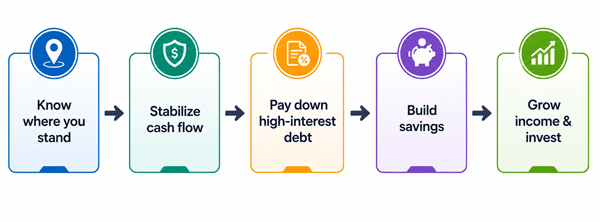
Step 1: Get a Clear Picture of Where You Stand
You cannot fix what you cannot see. The first step is to take a financial snapshot. This may feel uncomfortable, especially if you have avoided checking balances or debt totals, but it gives you power. Your current situation is not a judgment. It is your starting point.
Make a Simple Money Snapshot
| Item | What to Record | Example |
|---|---|---|
| Monthly income | Take-home pay after taxes and deductions. | $2,800 per month. |
| Fixed expenses | Rent, utilities, insurance, and minimum debt payments. | $1,650 per month. |
| Variable expenses | Groceries, fuel, eating out, shopping, and entertainment. | $850 per month. |
| Debts | Balance, interest rate, minimum payment, and due date. | Credit card: $2,400 at 24% APR. |
| Savings | Cash, emergency fund, and sinking funds. | $300 in savings. |
| Net worth | Assets minus debts. | $5,000 in assets − $8,000 in debts = −$3,000. |
Do not worry if the numbers look bad. A clear starting point is better than a vague fear. Once you know the facts, you can make a realistic plan.
Step 2: Track Your Spending for 30 Days
Most people do not overspend because they are careless. They overspend because small purchases are easy to forget. A few food deliveries, subscriptions, rides, or impulse buys can quietly consume money that could have gone toward savings or debt payoff.
How to Track Spending Without Making It Complicated
- Use a notebook, spreadsheet, budgeting app, or bank export.
- Record every purchase for one month, even small ones.
- Group spending into categories: housing, food, transportation, debt, savings, personal, entertainment, and miscellaneous.
- Mark each item as a need, want, debt payment, or savings contribution.
- At the end of the month, look for patterns instead of blaming yourself.
Example: You may think you spend $150 a month eating out, but tracking shows it is $380. That does not mean you can never eat out again. It means you found a realistic place to save $100 to $200 per month without changing your rent, job, or lifestyle completely.
Step 3: Build a Beginner Budget That Fits Real Life
A budget is simply a plan for your money before it disappears. It does not have to be perfect. The best budget is one you can actually follow.
Remember that a budgeting method is a flexible guide, not a strict rule. If housing, food, transport, or family responsibilities take a larger share of income, adjust the percentages while still trying to spend less than you earn.
Popular Budgeting Methods Compared
| Budget Method | How It Works | Best For | Limitation |
|---|---|---|---|
| 50/30/20 budget | Aim for 50% needs, 30% wants, and 20% for savings and debt repayment. | Beginners who want a simple guideline. | May not fit high-cost areas or low-income months. |
| Zero-based budget | Give every dollar a job: bills, food, debt, savings, and fun. | People who want maximum control. | Requires more tracking and planning. |
| Envelope method | Set spending limits by category, often with cash or separate accounts. | People who overspend in certain categories. | Less convenient for digital payments. |
| Pay-yourself-first budget | Move savings first, then spend what remains. | People trying to build savings consistently. | Can fail if bills are underestimated. |
A Simple Starter Budget Formula
For the first month, do not aim for an ideal budget. Aim for a workable budget:
- List your take-home income.
- Subtract fixed bills and minimum debt payments.
- Set realistic spending limits for food, transportation, and essentials.
- Add a small emergency savings amount, even if it is only $10 or $25.
- Assign a limit for flexible spending so the budget does not feel like punishment.
- Review weekly and adjust before the month ends.
Step 4: Stop the Financial Leaks First
Before trying to make dramatic changes, fix the leaks that quietly drain money every month. Financial leaks are small, repeated costs that do not match your values or goals.
| Common Money Leak | What to Do | Possible Monthly Savings |
|---|---|---|
| Unused subscriptions | Cancel or pause anything you rarely use. | $10–$80 |
| Food waste | Plan meals around what you already have. | $30–$150 |
| Bank fees | Switch accounts, avoid overdrafts, and set alerts. | $5–$50 |
| Impulse shopping | Use a 24-hour rule before nonessential purchases. | $25–$200 |
| High phone/internet bills | Negotiate, downgrade, or compare providers. | $10–$60 |
| Late fees | Automate minimum payments and set due-date reminders. | $10–$100+ |
The goal is not to remove every joy from your life. The goal is to stop paying for things you do not use, need, or truly value.
Step 5: Create a Small Emergency Fund Before Going All-In on Debt
If you have no savings, even a small emergency can push you back into credit card debt, payday loans, or borrowing from family. That is why many people should build a starter emergency fund before aggressively paying off debt.
Keep making required minimum payments on debts and essential bills while building this starter fund. Missing minimum payments can create fees, damage credit, and make the situation harder to repair.
How Much Should a Beginner Save First?
A practical first goal is $500 to $1,000, or one month of essential expenses if your income is irregular. After that, work toward three to six months of essential expenses over time. This larger goal can take months or years, so do not let it discourage you.
If $500 feels too high, start with the first achievable milestone, such as $50, $100, or one week of groceries. Small emergency savings still reduce stress and prevent many small setbacks from becoming new debt.
- Keep emergency savings separate from everyday spending money.
- Use it only for real unexpected needs, not routine bills or planned shopping.
- Rebuild it after you use it.
- Automate small transfers if possible.
Step 6: Deal With High-Interest Debt Strategically
Debt is not all the same. A low-interest mortgage or student loan may be very different from a credit card charging high interest. The most urgent debt is usually debt that grows quickly, has high interest, or puts your basic needs at risk.
As a simple rule, high-interest debt often includes credit cards, payday loans, costly personal loans, and overdue balances with fees. Exact rates and rules vary by country, so review your own agreement before choosing a payoff plan.
Debt Snowball vs. Debt Avalanche
| Method | How It Works | Main Benefit | Best For |
|---|---|---|---|
| Debt snowball | Pay the smallest balance first while making minimum payments on the rest. | Quick wins and motivation. | People who need momentum. |
| Debt avalanche | Pay the highest-interest debt first while making minimum payments on the rest. | Usually saves the most interest. | People focused on math efficiency. |
Both methods can work. The best debt payoff plan is the one you will stick with. If the avalanche method feels too slow, the snowball method may keep you motivated. If you are disciplined and want to reduce interest costs, the avalanche method may be better.
Step 7: Protect Yourself From Scams and Bad Financial Shortcuts
When people feel stressed about money, they become more vulnerable to promises of quick fixes. Be careful with companies that promise to erase debt, repair credit instantly, guarantee investment returns, or charge large upfront fees. The Federal Trade Commission warns that debt relief and credit repair scams often charge fees while failing to deliver real help.
- Avoid anyone who guarantees they can remove accurate negative information from your credit report.
- Be cautious of debt relief companies that demand upfront payment before results.
- Do not invest in anything you do not understand.
- Never borrow money to invest in a “guaranteed” opportunity.
- Check credentials before working with financial professionals.
Step 8: Improve Your Credit the Right Way
Good credit can make borrowing cheaper and may affect rental applications, insurance pricing, and other parts of financial life depending on where you live. Improving credit takes time, but the basics are simple.
Credit systems differ by country. Use the official credit bureau, regulator, or consumer protection source available where you live, and avoid sharing personal identity information with unknown websites.
- Pay bills on time. Set reminders or automatic minimum payments.
- Keep credit card balances low compared with limits.
- Avoid applying for too much new credit at once.
- Check credit reports for errors and dispute inaccurate information.
- Keep older accounts open when possible, especially if they have no annual fee and help your credit history.
Do not pay a company to do things you can often do yourself, such as disputing inaccurate credit report information. The FTC provides consumer information on free credit reports, disputing errors, and avoiding credit repair scams.
Step 9: Increase Income Alongside Cutting Costs
Cutting expenses is powerful, but it has a limit. You can reduce spending only so far. Increasing income can speed up every financial goal: emergency savings, debt payoff, investing, home ownership, education, or career freedom.
Practical Ways to Raise Income
Start with ethical and realistic income options. Avoid side hustles that require large upfront payments, unclear contracts, or promises of guaranteed returns.
| Income Strategy | Examples | Best First Step |
|---|---|---|
| Negotiate pay | Ask for a raise, request a market adjustment, or discuss promotion criteria. | Document your achievements and gather salary data. |
| Upgrade skills | Certifications, software skills, language skills, sales skills, or trade skills. | Choose one skill linked to better-paying roles. |
| Change jobs | Apply for roles with higher pay or better benefits. | Update your resume and apply consistently. |
| Side income | Freelancing, tutoring, delivery, repair work, or online services. | Start with skills or assets you already have. |
| Sell unused items | Furniture, electronics, clothing, or tools. | Use the proceeds for emergency savings or debt repayment. |
A useful rule: give every extra dollar a job before it arrives. For example, decide that 70% of any raise goes to savings or debt payoff and 30% goes to lifestyle improvement. This lets you enjoy progress without losing the benefit of higher income.
Step 10: Start Saving for Short-Term and Long-Term Goals
Once you have a starter emergency fund and a plan for high-interest debt, create separate savings goals. Mixing all savings in one account can make it hard to know what money is available for what purpose.
| Goal Type | Examples | Where to Keep the Money |
|---|---|---|
| Emergency fund | Job loss, urgent repairs, and medical costs. | Accessible savings account. |
| Sinking fund | Car insurance, holidays, school fees, and annual bills. | Separate savings bucket or account. |
| Short-term goal | Moving costs, a wedding, travel, or a laptop. | Savings account or another low-risk cash option. |
| Long-term goal | Retirement, wealth building, or children's education. | Investment or retirement account, depending on your country and goal. |
Step 11: Learn the Basics of Investing Before You Start
Investing can help build wealth over time, but it is not the same as saving. Saving is for money you need to keep safe and accessible. Investing involves risk and is usually better for long-term goals. Investor.gov explains that investing means putting money into assets such as stocks or bonds with the expectation of a return over time, and that all investments involve risk.
Saving vs. Investing
| Feature | Saving | Investing |
|---|---|---|
| Purpose | Safety and easy access to money. | Long-term growth. |
| Best for | Emergency funds and short-term goals. | Retirement and goals more than 5 years away. |
| Risk | Low if held in a safe account. | Market value can rise or fall. |
| Return potential | Usually lower. | Usually higher over long periods, but not guaranteed. |
| Time horizon | Days to a few years. | Several years or decades. |
Before investing, understand fees, diversification, risk tolerance, taxes, and your time horizon. Avoid investing emergency money or money needed soon. Also understand compound interest, which means earning returns on both your original money and previous returns. Investor.gov describes compound interest as earning interest on interest, and provides calculators to estimate growth over time.
Readers should check official investor education resources, licensed advisers, tax rules, and retirement account rules in their own country before investing. Product names, protections, and tax benefits can differ widely.
Step 12: Build Financial Systems So Progress Becomes Automatic
Motivation comes and goes. Systems keep working. A financial system is a repeatable routine that helps you avoid missed payments, overspending, and forgotten goals.
- Automate bills or at least automate minimum debt payments.
- Set calendar reminders before major due dates.
- Automate savings on payday, even if the amount is small.
- Use separate accounts or buckets for bills, spending, emergency savings, and goals.
- Review your budget weekly for 10 minutes.
- Do a deeper monthly review to update debts, savings, and net worth.
Step 13: Use a 90-Day Financial Reset Plan
A 90-day plan is long enough to create real change but short enough to feel manageable. Here is a practical structure.
If your income is unstable, use the same 90-day structure but review weekly. Your main goal is not perfection; it is to create a repeatable system that works even in uneven months.
| Time Period | Main Focus | Actions |
|---|---|---|
| Days 1–7 | Financial snapshot | List income, expenses, debts, savings, due dates, and problem areas. |
| Days 8–30 | Budget and spending control | Track spending, eliminate money leaks, create a realistic budget, and start a small emergency fund. |
| Days 31–60 | Debt and savings momentum | Choose the debt snowball or debt avalanche method, automate savings, sell unused items, and avoid taking on new debt. |
| Days 61–90 | Income and long-term plan | Look for income opportunities, review your credit, set savings goals, and learn investing basics. |
■ Real-World Example: From Paycheck-to-Paycheck to Stability
Consider Sara, who earns $2,500 per month after taxes. She has $150 in savings, $3,200 in credit card debt, and feels like money disappears every month.
| Action | Change Made | Monthly Impact |
|---|---|---|
| Tracked spending | Found $220 per month spent on takeout and impulse shopping. | +$120 redirected after keeping some money for entertainment. |
| Canceled money leaks | Canceled two subscriptions and reduced the phone plan. | +$45 saved. |
| Started an emergency fund | Automated a $75 transfer each payday. | +$150 saved per month. |
| Created a debt plan | Used the debt avalanche method for a high-interest credit card. | +$165 extra paid toward debt each month. |
| Increased income | Started weekend tutoring twice a month. | +$160 earned per month. |
After 90 days, Sara has over $450 in emergency savings, has reduced her card balance, and has a clear system. She is not wealthy yet, but her financial situation is improving because the direction has changed.
3. Common Mistakes That Keep People Stuck Financially
- Waiting for a perfect month to start. Start with imperfect numbers.
- Making a budget that is too strict and impossible to follow.
- Paying debt aggressively with no emergency savings at all.
- Ignoring interest rates and fees.
- Using credit cards as income instead of as a payment tool.
- Increasing lifestyle spending every time income rises.
- Investing before understanding risk or before handling urgent debt.
- Comparing your progress with people who have different income, support, or responsibilities.
4. Practical Financial Improvement Checklist
- Write down your income, expenses, debts, and savings.
- Track every expense for 30 days.
- Create a realistic beginner budget.
- Cancel or reduce at least three money leaks.
- Save a starter emergency fund of $500 to $1,000 if possible.
- Choose a debt payoff method and pay more than the minimum on one debt.
- Set up automatic payments or reminders.
- Check credit reports where available and dispute errors.
- Look for one income improvement opportunity.
- Separate savings goals into different buckets.
- Learn investing basics before investing money you cannot afford to risk.
- Review progress monthly and adjust your plan.
■ Frequently Asked Questions
1. What is the first step to improving my financial situation?
The first step is to understand your current numbers. List your income, expenses, debts, savings, and due dates. Once you know where you stand, you can make a realistic plan instead of guessing.
2. Should I save money or pay off debt first?
If you have no savings, build a small starter emergency fund first so a surprise bill does not create more debt. After that, focus on high-interest debt while continuing small savings contributions if possible.
3. How can I improve my finances on a low income?
Start by tracking spending, protecting essentials, cutting leaks, building a small emergency fund, and looking for income opportunities. On a low income, increasing earnings is often just as important as reducing costs.
4. How much emergency savings should I have?
A starter goal of $500 to $1,000 can help with small emergencies. A stronger long-term goal is three to six months of essential expenses, but it is fine to build toward that gradually.
5. What is the fastest way to improve my financial situation?
The fastest realistic approach is to stop new debt, cut obvious leaks, sell unused items, negotiate bills, automate savings, and put extra money toward high-interest debt. Be cautious of quick-fix promises.
6. Can budgeting really change my financial life?
Yes, if it is realistic. A budget helps you decide where money should go before it is spent. It works best when combined with tracking, automation, and regular reviews.
7. When should I start investing?
Consider investing after you understand the risks, have a basic emergency fund, and have a plan for high-interest debt. Investing is usually best for long-term goals, not money needed soon.
8. How often should I review my finances?
Review spending weekly for a few minutes and do a fuller monthly review of your budget, debt balances, savings, and goals. Small reviews prevent big surprises.
9. What is a good monthly routine for financial improvement?
A good routine is to review bills weekly, track flexible spending, move a small amount to savings on payday, check debt balances monthly, and update your goals every 30 days. Simple routines are easier to keep than complicated systems.
10. What should I avoid when trying to fix my finances fast?
Avoid new high-interest debt, get-rich-quick schemes, guaranteed investment promises, unnecessary paid credit repair, and budgets that are so strict you cannot follow them. Sustainable progress is safer than a quick shortcut.
■ Conclusion: Improve Direction Before You Chase Perfection
You do not need to fix your entire financial life overnight. You need to change the direction. Start by seeing your numbers clearly. Build a budget that fits real life. Save a small emergency fund. Pay down expensive debt. Protect yourself from scams. Increase income where possible. Then learn to save and invest for longer-term goals.
Financial improvement is not about being perfect with money. It is about making better decisions more often, recovering faster from setbacks, and building systems that support the future you want.
Sources Consulted
- Consumer Financial Protection Bureau. “An essential guide to building an emergency fund.” https://www.consumerfinance.gov/an-essential-guide-to-building-an-emergency-fund/
- Investor.gov. “Introduction to Investing.” https://www.investor.gov/introduction-investing
- Investor.gov. “What is compound interest?” https://www.investor.gov/additional-resources/information/youth/teachers-classroom-resources/what-compound-interest
- Investor.gov. “Compound Interest Calculator.” https://www.investor.gov/financial-tools-calculators/calculators/compound-interest-calculator
- Federal Trade Commission. “Debt Relief and Credit Repair Scams.” https://www.ftc.gov/news-events/topics/consumer-finance/debt-relief-credit-repair-scams
- Federal Trade Commission Consumer Advice. “Credit and Debt.” https://consumer.ftc.gov/credit-loans-and-debt/credit-and-debt
Reader Advice: This article is for educational and information purposes only and should not be taken as personal financial, tax, legal, or investment advice. Please check the latest information from official sources or qualified professionals, as rules, policies, and financial products can change over time.