How to Save Money on Groceries
Groceries are one of the easiest budget categories to overspend on because food purchases happen often, prices change, and many decisions are made when you are tired, hungry, or rushed. The good news is that grocery savings do not have to mean eating boring meals, buying only the cheapest food, or spending hours clipping coupons.
The best way to save money on groceries is to build a simple system: know what you already have, plan a few realistic meals, shop with a focused list, compare prices by unit, reduce waste, and repeat what works. Small improvements can add up because groceries are a recurring expense.
This guide explains practical grocery-saving strategies for beginners, including what to do before you shop, how to shop smarter in the store or online, how to store food so it lasts longer, and how to avoid common mistakes that quietly drain your food budget.
Quick answer: To save money on groceries, plan meals around food you already have, make a list before shopping, compare unit prices, buy versatile staples, use coupons only for items you need, choose store brands when quality is similar, and prevent food waste with better storage and leftovers.
Grocery Savings Workflow
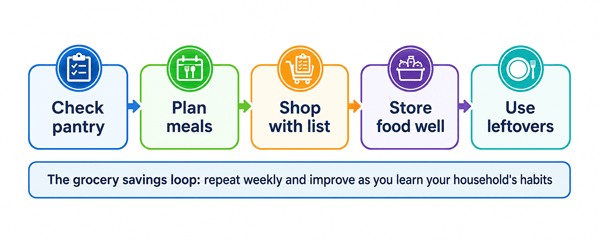
Diagram: A simple weekly grocery savings loop you can repeat and improve over time.
■ Why Grocery Spending Gets Out of Control
Grocery spending often rises for reasons that are easy to miss. You may buy ingredients without a plan, forget what is already in the fridge, shop while hungry, choose convenience foods by default, or throw away food that was not used in time.
Food waste is a major part of the problem. The USDA estimates that 30% to 40% of the U.S. food supply is wasted, which shows how much money can disappear after food has already been purchased. Even if your household wastes far less than that, reducing spoilage is one of the most practical ways to lower your grocery bill.
Another reason groceries feel expensive is decision fatigue. The more choices you make in the store, the easier it is to add unplanned snacks, drinks, ready-made meals, or specialty ingredients. A simple plan reduces those last-minute decisions.
Step 1: Set a Realistic Grocery Budget
Before you try to cut costs, find out what you currently spend. Review one to three months of grocery receipts, bank transactions, or delivery-app orders. Include supermarket purchases, bulk-store trips, convenience-store food, and household basics if you buy them together with groceries.
A realistic grocery budget is not the lowest number you can imagine. It should fit your household size, diet, location, schedule, health needs, and cooking ability. The goal is to create a budget you can actually follow, not one that makes you give up after a week.
Step 2: Shop Your Kitchen Before the Store
The cheapest groceries are often the ones you already bought. Before making a list, check your fridge, freezer, pantry, and spice shelf. Look for food that needs to be used soon, duplicates, half-used ingredients, and staples that can become meals.
A five-minute kitchen check helps you avoid buying another jar of sauce, another bag of rice, or more produce than your family can eat. It also gives you meal ideas based on what is already available.
Step 3: Plan Meals Around Real Life
Meal planning does not have to mean preparing every meal from scratch. A good plan matches your real week. If you have two busy nights, plan easy meals. If you know you will eat out once, do not buy ingredients for seven full dinners.
For beginners, plan three to five dinners, two simple breakfast options, two lunch options, and a few flexible snacks. Leave room for leftovers and schedule one low-effort meal, such as eggs and toast, soup, pasta, rice bowls, or sandwiches.
Step 4: Make a Grocery List and Stick to It
A grocery list is one of the simplest ways to save money because it turns shopping into execution instead of decision-making. Organize your list by store section: produce, dairy, meat or protein, pantry, frozen, and household items.
Before adding an item, ask: Do I need it for a planned meal? Do I already have it? Will I use it before it spoils? Is there a cheaper substitute? This small pause prevents many impulse purchases.
Step 5: Compare Unit Prices, Not Package Prices
The lowest shelf price is not always the best deal. Unit price tells you the cost per ounce, pound, kilogram, liter, or item. It helps you compare different package sizes and brands fairly.
For example, a 500g bag of rice may cost less at the register than a 2kg bag, but the larger bag may be cheaper per kilogram. Unit pricing is especially useful for cereal, rice, pasta, cooking oil, cleaning supplies, diapers, spices, and snacks.
Step 6: Use Store Brands Wisely
Store brands can be a reliable way to reduce grocery costs, especially for basics like flour, sugar, rice, pasta, oats, canned beans, frozen vegetables, milk, eggs, spices, and cleaning products. In many cases, the quality difference is small or unnoticeable in cooked meals.
A practical approach is to test store brands one item at a time. If your family likes the taste and quality, keep the cheaper option. If not, return to the brand that works for you. Saving money should not require wasting food no one will eat.
Step 7: Build Meals Around Low-Cost Staples
The most budget-friendly meals often start with affordable staples: rice, beans, lentils, potatoes, oats, pasta, eggs, seasonal vegetables, frozen vegetables, canned tomatoes, yogurt, and whole grains. These foods can be filling, flexible, and nutritious when combined well.
Try building meals with a simple formula: one low-cost base, one protein, one vegetable, and one sauce or seasoning. This creates variety without needing expensive specialty ingredients.
Step 8: Buy Produce Strategically
Fresh produce can save money or waste money depending on how it is bought and used. Buy enough fresh produce for the next few days, then rely on frozen or longer-lasting produce for later in the week.
Good longer-lasting options include carrots, cabbage, onions, potatoes, apples, oranges, squash, and frozen vegetables. More delicate items like berries, leafy greens, herbs, and mushrooms should be bought in smaller amounts unless you have a specific plan to use them quickly.
Step 9: Use Coupons, Sales, and Loyalty Programs Carefully
Coupons and sales can help, but only when they reduce the cost of items you were already likely to buy. A discount on an unnecessary item is still extra spending.
Before using a coupon, compare it with the store brand and unit price. Sometimes a discounted name-brand item is still more expensive than the regular store-brand version. Loyalty programs can be useful for digital coupons and personalized discounts, but they work best when paired with a list.
Step 10: Reduce Food Waste After Shopping
Saving money on groceries does not end at checkout. Food only saves you money if it gets eaten. When you get home, store food properly, freeze what you will not use soon, and place older items where you can see them.
The USDA FoodKeeper resource provides storage guidance to help consumers understand how long foods can stay fresh and safe when stored properly. This matters because better storage can turn food you might have thrown away into meals you actually use.
Helpful safety note: Many date labels describe quality rather than exact safety, but infant formula is an important exception and should be used by the date on the label. When in doubt, follow official food-safety guidance and avoid taking risks with spoiled or unsafe food.
A simple “use first” area in the fridge can also help. Place opened items, older produce, and leftovers in one visible spot so they become the first ingredients you use in meals.
Step 11: Cook Once, Eat More Than Once
Batch cooking does not have to mean eating the same meal all week. It can mean cooking a large pot of rice, roasting a tray of vegetables, preparing beans or lentils, or cooking extra chicken that can be used in different meals.
For example, roasted chicken can become dinner one night, sandwiches the next day, and soup or rice bowls later. This saves time and reduces the temptation to order takeout because ingredients are already partly prepared.
Step 12: Choose Convenience Carefully
Convenience foods are not automatically bad. Pre-cut vegetables, rotisserie chicken, frozen meals, and ready-made sauces can sometimes prevent takeout, which may save money overall. The key is to compare convenience with your real alternatives.
If a slightly more expensive shortcut helps you cook at home on a busy night, it may be worth it. But if convenience items regularly replace cheaper staples without saving time you truly need, they can inflate your grocery bill.
Step 13: Track What Works
You do not need a complicated spreadsheet. Keep a small note on your phone with meals your household likes, stores with good prices, items that often go to waste, and staples you should restock when they are on sale.
After a few weeks, patterns become clear. Maybe you buy too much salad, your family eats more rice than expected, or frozen vegetables work better than fresh for your schedule. Use those patterns to improve your next shopping trip.
■ Practical Grocery-Saving Strategies by Category
| Category | What to Do | Why It Works |
|---|---|---|
| Meal planning | Plan 3 to 5 dinners instead of every meal perfectly. | It reduces pressure and leaves room for leftovers or schedule changes. |
| Shopping list | Write the list after checking your kitchen. | You avoid duplicates and use food you already paid for. |
| Unit prices | Compare cost per ounce, pound, kg, liter, or item. | It reveals which package or brand is truly cheaper. |
| Store brands | Test generic versions of basic staples. | Many basics perform similarly in recipes at a lower price. |
| Frozen foods | Use frozen vegetables, fruit, and proteins. | They last longer and reduce spoilage. |
| Leftovers | Plan one leftover meal or lunch day each week. | It turns extra food into another meal instead of waste. |
| Coupons | Use only for items already on your list. | It prevents buying things just because they are discounted. |
1. Cheap Grocery Staples and How to Use Them
| Staple | Budget-Friendly Uses | Beginner Tip |
|---|---|---|
| Rice | Rice bowls, fried rice, soups, curries, casseroles | Cook extra and refrigerate or freeze portions. |
| Oats | Breakfast bowls, overnight oats, smoothies, baking | Buy plain oats and add your own fruit or spices. |
| Beans and lentils | Soups, stews, tacos, salads, rice bowls | Canned is convenient; dry is often cheaper if you have time. |
| Eggs | Breakfast, fried rice, sandwiches, quick dinners | Use when you need a low-effort protein. |
| Frozen vegetables | Stir-fries, soups, pasta, omelets, side dishes | No washing, chopping, or spoilage pressure. |
| Potatoes | Baked potatoes, hash, soups, sheet-pan meals | Store in a cool, dark place away from onions. |
| Canned tomatoes | Sauces, soups, chili, stews | Keep a few cans for fast meals. |
2. Fresh vs Frozen vs Canned: Which Saves More?
| Option | Best For | Pros | Watch Out For |
|---|---|---|---|
| Fresh | Produce you will use soon, salads, raw snacks | Great taste and texture when fresh | Can spoil quickly if overbought |
| Frozen | Vegetables, fruit, seafood, prepared ingredients | Longer storage, often less waste | Needs freezer space |
| Canned | Beans, tomatoes, tuna, corn, soups | Shelf-stable and convenient | Check sodium, added sugar, and unit price |
3. Real-World Examples
Example 1: The Busy Worker
A busy worker keeps buying groceries but still orders takeout because cooking feels like too much effort. A better plan is to buy ingredients for two fast meals, one frozen backup meal, breakfast staples, and lunch items that require little preparation. The savings come from replacing even one or two takeout meals per week with easy home meals.
Example 2: The Family With Food Waste
A family buys fresh produce in large amounts because it seems healthy, but some of it spoils each week. They switch to buying delicate produce for the first half of the week and frozen vegetables for later. They also add a leftover night. This reduces waste without reducing vegetable intake.
Example 3: The Beginner Cook
A beginner cook feels overwhelmed by long recipes. Instead of buying many specialty ingredients, they choose five repeatable meals: pasta with vegetables, rice bowls, eggs and potatoes, lentil soup, and chicken wraps. Repeating basic meals builds confidence and keeps the grocery list simple.
4. Common Grocery-Saving Mistakes to Avoid
- Shopping without checking what you already have.
- Buying bulk items that expire before you use them.
- Using coupons for products you would not normally buy.
- Assuming every sale is a good deal without checking the unit price.
- Buying too much fresh produce without a plan.
- Ignoring leftovers until they spoil.
- Making a meal plan that is too strict for your real schedule.
- Choosing the cheapest option even when your household will not eat it.
5. Benefits and Limitations of Grocery Budgeting
| Benefits | Limitations |
|---|---|
| Lower recurring expenses over time | Savings may take a few weeks to notice clearly |
| Less food waste and fewer duplicate purchases | Requires some planning and habit-building |
| More control over meals and nutrition | Food prices, location, and household needs affect results |
| Fewer impulse purchases | Very restrictive budgets can lead to frustration or takeout spending |
■ Beginner Grocery Savings Checklist
- Review your recent grocery spending to find your starting point.
- Check your fridge, freezer, and pantry before planning meals.
- Choose a few realistic meals for the week, not a perfect plan.
- Make a grocery list organized by store section.
- Compare unit prices when choosing sizes and brands.
- Try store brands for basic staples.
- Buy fresh produce in amounts you can actually use.
- Use frozen or canned foods to reduce waste.
- Freeze extra meat, bread, cooked grains, or leftovers before they spoil.
- Track the meals and habits that save the most money for your household.
■ Misconceptions About Saving Money on Groceries
Myth 1: You Have to Give Up Healthy Food
Healthy eating and grocery savings can work together. Budget-friendly foods like oats, eggs, beans, lentils, frozen vegetables, potatoes, canned tomatoes, yogurt, and seasonal produce can support nutritious meals at a reasonable cost.
Myth 2: Bulk Buying Always Saves Money
Bulk buying saves money only when the unit price is lower and you will use the item before it expires. Bulk rice, oats, pasta, and toilet paper may make sense. Bulk salad greens, berries, or snacks may not.
Myth 3: Coupons Are the Best Way to Save
Coupons can help, but planning, reducing waste, buying staples, and comparing unit prices often create more reliable savings. Coupons are most useful when they fit your list rather than shaping your list.
■ Frequently Asked Questions
These answers cover common beginner questions about grocery budgeting, food waste, frozen foods, online shopping, and low-cook meals.
1. What is the fastest way to save money on groceries?
The fastest way is to shop your kitchen first, make a list, avoid impulse items, and plan meals around ingredients you already have. This can reduce duplicate purchases immediately.
2. How much should I spend on groceries each month?
There is no single right amount. It depends on household size, location, diet, income, cooking habits, and food prices. Start by tracking your current spending, then set a realistic target that reduces waste and impulse purchases without making meals too restrictive.
3. Is it cheaper to cook at home?
Usually, cooking at home is cheaper than relying heavily on takeout or restaurant meals, especially when you use simple staples and leftovers. However, complicated recipes with many specialty ingredients can become expensive.
4. Are frozen vegetables healthy and budget-friendly?
Frozen vegetables can be a smart grocery choice because they last longer, are easy to portion, and reduce spoilage. They are especially useful for soups, stir-fries, omelets, pasta, and side dishes.
5. Should I buy groceries online or in the store?
Online grocery shopping can reduce impulse buys and make price comparison easier, but delivery fees, service fees, and substitutions can increase costs. In-store shopping may offer clearance deals and better produce selection. Compare the total cost, not just item prices.
6. How can I save money if I do not like cooking?
Start with low-cook meals such as sandwiches, yogurt bowls, eggs, rice bowls, salads with canned beans, rotisserie chicken meals, frozen vegetables, and simple pasta. The goal is to make eating at home easier than ordering out.
7. What groceries should I always keep at home?
Useful staples include rice, oats, pasta, beans or lentils, canned tomatoes, eggs, frozen vegetables, onions, potatoes, basic spices, cooking oil, and a few proteins your household likes.
8. How do I stop wasting food?
Buy less delicate produce, store food correctly, freeze extras early, plan leftover meals, and keep a visible “use first” area in the fridge for items that need attention.
■ Final Thoughts: Small Grocery Habits Add Up
Saving money on groceries is not about perfection. It is about building repeatable habits that make food spending easier to control. Start with one or two changes, such as checking your kitchen before shopping and comparing unit prices. Then add more habits as they become natural.
The most effective grocery strategy is the one your household can keep using. A realistic plan, simple meals, smart storage, and less waste can help you spend less while still eating food you enjoy.
Sources and References
- USDA Food Waste FAQs: U.S. food waste is estimated at 30% to 40% of the food supply.
- FoodSafety.gov FoodKeeper App: storage guidance to maximize freshness and quality.
- USDA FSIS Food Product Dating: explains food product date labels and the infant-formula use-by exception.
Reader Advice: This article is for educational and informational purposes only and should not be taken as financial, nutrition, medical, legal, or food-safety advice. Please check the latest details from official sources, as prices, rules, guidance, and policies can change over time.