How to Save Money While Traveling
Travel can be one of the most rewarding ways to spend money, but it can also become expensive quickly if you do not plan ahead. The good news is that saving money while traveling does not mean choosing the cheapest option every time, skipping every fun experience, or turning your trip into a stressful budgeting exercise.
Smart travel spending is about getting the best value for your money. That means knowing where your money usually goes, making a few decisions before you leave, avoiding common fees, and choosing experiences that matter most to you. This guide explains how to save money while traveling in a practical, beginner-friendly way, with travel budget tips that work for solo travelers, couples, families, students, and first-time international travelers.
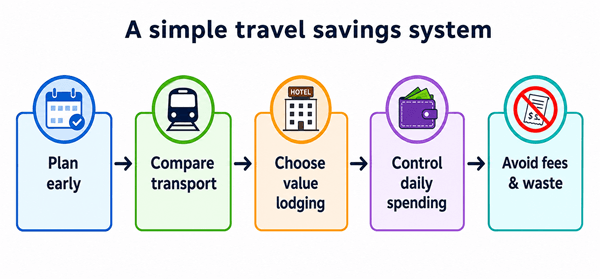
Figure: A simple system for lowering travel costs before and during your trip.
1. What Does It Mean to Save Money While Traveling?
Saving money while traveling means reducing unnecessary costs while still protecting comfort, safety, and enjoyment. It is not only about finding the lowest price. A very cheap hotel far from everything may cost more after taxis. A low-cost flight with baggage fees may be more expensive than a regular fare. A cheap restaurant in a tourist zone may still be overpriced compared with a local place two streets away.
The goal is to spend less on things that do not improve your trip, so you have more money for the things that do: better experiences, safer transport, longer stays, or simply less financial stress when you return home.
2. Start With a Realistic Travel Budget
The easiest way to overspend is to begin a trip with only a rough guess. A travel budget gives every major cost a place before you start booking. It helps you compare options calmly instead of reacting to prices at the last minute. For better accuracy, separate fixed costs, daily costs, and emergency money before you book anything non-refundable.
| Budget Category | What to Include | Money-Saving Tip |
|---|---|---|
| Transportation | Flights, trains, buses, car rental, fuel, taxis, airport transfers | Compare total cost, not just ticket price. Include baggage, transfers, and time. |
| Accommodation | Hotel, hostel, apartment, taxes, resort fees, cleaning fees | Look at location, kitchen access, cancellation terms, and hidden charges. |
| Food and drink | Restaurants, groceries, coffee, snacks, bottled water | Plan a mix of groceries, local meals, and special meals. |
| Activities | Tours, museums, attractions, events, day trips | Book only must-do activities in advance and leave room for free local options. |
| Insurance and documents | Travel insurance, visa fees, passport photos, vaccines if needed | Budget these early because they are easy to forget. |
| Emergency buffer | Unexpected transport, medical needs, price changes, lost items | Add 10% to 20% of the trip budget if possible. |
Set a daily spending limit
After you estimate fixed costs such as flights and accommodation, divide the remaining money by the number of travel days. This gives you a simple daily limit for food, local transport, activities, and small purchases.
Helpful formula: Total trip budget - fixed bookings - emergency buffer = flexible spending money. Divide that amount by travel days to create a realistic daily limit.
- Example: If you have $600 left after bookings for a 10-day trip, your daily spending limit is $60.
- If one day costs $90, balance it with a cheaper day later.
- Track spending at the end of each day so small leaks do not become a surprise.
Build the trip around your priorities
A good budget does not treat every expense equally. Decide what matters most to you. Some travelers care most about food, others about comfort, photography, museums, nightlife, beaches, or nature. Save aggressively on low-priority areas and spend intentionally on high-priority experiences.
3. Choose Travel Dates Carefully
Dates can affect travel costs more than almost any other factor. Flights, hotels, car rentals, and tours often become more expensive during holidays, festivals, school breaks, weekends, and peak tourist seasons.
Being flexible by even one or two days can sometimes reduce costs. If your schedule allows it, compare several departure and return dates before you book, and check whether a nearby festival, school break, trade fair, or national holiday is increasing prices.
Travel during shoulder season
Shoulder season is the period between peak season and low season. It often offers a better balance of price, weather, and crowd levels. For example, many destinations are cheaper just before or after the busiest holiday months.
- Pros: lower prices, fewer crowds, more accommodation choices.
- Cons: weather may be less predictable, some seasonal attractions may have shorter hours.
Avoid the most expensive travel days
Weekend departures, holiday periods, and major local events can push prices higher. Midweek travel is often worth checking. For road trips, leaving early can also reduce fuel wasted in traffic and lower the chance of needing an extra overnight stop.
4. How to Save Money on Flights and Long-Distance Transportation
Transportation is often one of the biggest travel expenses. The best choice depends on distance, time, luggage, comfort, and local prices. A flight is not always the best deal once you include airport transfers and baggage. A train or bus may be slower but cheaper and more central.
Compare the total trip cost, not just the fare
When comparing flights, buses, trains, or rental cars, include every related cost. A cheap fare can become expensive after checked bags, seat selection, meals, airport transfers, tolls, fuel, parking, or a hotel night caused by an awkward schedule.
| Option | Often Best For | Possible Hidden Costs | How to Save |
|---|---|---|---|
| Flight | Long distances and limited travel time | Bags, seat fees, airport transfers, food at airport | Pack lighter, compare nearby airports, avoid unnecessary add-ons. |
| Train | City-to-city travel, scenic routes, central stations | Premium seats, last-minute fares, station food | Book early where pricing rises, bring snacks, compare rail passes carefully. |
| Bus | Budget travel and shorter regional trips | Extra luggage, longer travel time, taxis from bus station | Use overnight routes only if you can sleep safely and comfortably. |
| Rental car | Rural areas, families, road trips, flexible routes | Fuel, parking, insurance, tolls, one-way fees | Choose the smallest practical car and check parking before booking lodging. |
Use fare alerts and compare several booking channels
Fare alerts can help you notice price changes, especially when your dates are flexible. Compare airline or transport company websites with reputable booking platforms, but check the final price, baggage rules, refund options, schedule reliability, and cancellation rules before paying.
Pack light to avoid baggage fees
Baggage fees can quietly raise the cost of a trip. Traveling with a carry-on or one checked bag per couple or family can save money and make moving around easier.
- Choose clothes that mix and match.
- Use laundry access instead of packing for every day.
- Check baggage size and weight rules before leaving home.
- Weigh your bag before going to the airport.
Consider nearby airports, stations, or routes
Nearby airports or train stations may be cheaper, but only if the transfer cost and extra time still make sense. A cheaper airport that requires an expensive taxi late at night may not be a bargain.
Also compare arrival times. A very late arrival can create extra costs for taxis, airport food, missed public transport, or a hotel night near the airport.
5. How to Save Money on Accommodation
Accommodation affects more than where you sleep. It can change your food costs, local transport costs, safety, rest, and daily convenience. The cheapest room is not always the cheapest stay.
Choose location carefully
A hotel outside the center may look cheaper, but daily transport can erase the savings. A well-located room may let you walk to attractions, return for breaks, and avoid late-night taxis.
| Accommodation Type | Good For | Pros | Cons |
|---|---|---|---|
| Hotel | Short trips, comfort, service | Private, predictable, often secure | May charge for breakfast, parking, resort fees, or laundry. |
| Hostel | Solo travelers, students, social trips | Low cost, shared kitchens, social atmosphere | Less privacy, noise, shared bathrooms in some cases. |
| Apartment or vacation rental | Families, longer stays, cooking meals | Kitchen, laundry, more space | Cleaning fees, service fees, stricter cancellation rules. |
| Guesthouse or homestay | Local experience, smaller towns | Often affordable and personal | Amenities may vary; check recent reviews. |
| House sitting or home exchange | Flexible travelers, longer stays | Very low accommodation cost | Requires trust, planning, responsibilities, and platform rules. |
Look for kitchen, laundry, and breakfast value
A slightly more expensive room with breakfast, a fridge, a microwave, or laundry access can reduce daily costs. This is especially useful for families and longer trips.
For longer stays, weekly rates, free cancellation windows, and direct-property offers can sometimes improve value, but only book directly with trustworthy providers.
Check taxes, fees, and cancellation terms
Before booking, look at the final price. Some properties add taxes, cleaning fees, service fees, resort fees, parking fees, or deposits near the end of checkout. Also check cancellation terms. A non-refundable room may be cheaper, but it can cost more if plans change.
Use reviews wisely
Reviews can help you avoid costly mistakes. Focus on recent reviews that mention cleanliness, safety, noise, Wi-Fi, location, transport access, check-in problems, and unexpected fees. A low price is not good value if poor sleep, unsafe surroundings, or long transfers reduce the quality of the trip.
6. How to Save Money on Food While Traveling
Food is one of the easiest travel categories to control because you make choices several times a day. You do not need to avoid restaurants. The goal is to avoid paying restaurant prices for every meal, snack, drink, and coffee.
Use the one-special-meal rule
Choose one meal per day, or a few meals per trip, where you spend more intentionally. Keep the rest simple. For example, eat a basic breakfast, have a local lunch, and make dinner from groceries if you are tired.
| Food Choice | Estimated Cost Level | Best Use |
|---|---|---|
| Grocery breakfast | Low | Saves money daily and works well with early starts. |
| Street food or local casual meal | Low to moderate | Good value when clean, popular, and freshly prepared. |
| Tourist-area restaurant | Moderate to high | Convenient, but often more expensive for average quality. |
| Special restaurant experience | High | Worth it when it is a planned highlight, not a default choice. |
| Convenience-store snacks | Low to moderate | Useful for trains, hikes, airports, and late arrivals. |
Avoid tourist-menu traps
Restaurants right beside famous attractions often pay high rent and may charge more for convenience. Walk a few streets away, check menus before sitting down, and look for places used by locals or workers in the area.
Carry snacks and a refillable bottle
Small purchases add up. Keeping nuts, fruit, crackers, or simple snacks in your bag can help you avoid overpriced airport, station, and attraction food. In destinations where tap water is safe, a refillable bottle can also reduce costs.
Book accommodation that helps with food savings
A fridge, kettle, microwave, or shared kitchen can save money without much effort. Even if you only prepare breakfast and store leftovers, the savings can be meaningful over a week.
7. Save Money on Local Transportation
Local transportation can become expensive when you rely on taxis or ride-hailing for every movement. Before you arrive, learn the basic layout of your destination and the safest, most practical ways to get around.
Walk when it is safe and realistic
Walking is often the cheapest way to explore and can make a destination more memorable. However, do not walk in unsafe areas, extreme weather, or when it puts your health or belongings at risk.
Use public transport passes carefully
Day passes and multi-day passes can save money if you will use them enough. They are not always cheaper. Compare the pass price with the number of rides you realistically expect to take.
| Local Transport Option | When It Saves Money | When It May Not |
|---|---|---|
| Walking | Short distances, central lodging, safe neighborhoods | Bad weather, unsafe routes, long distances, heavy luggage. |
| Public transit | Cities with reliable buses, metros, or trams | Late nights, remote hotels, confusing routes, group travel where taxi is cheaper. |
| Bike or scooter rental | Flat cities, parks, beach towns | Unsafe roads, poor helmets, unclear rules, accident risk. |
| Taxi or ride-hailing | Groups, luggage, late arrivals, safety concerns | Daily use, surge pricing, traffic-heavy areas. |
| Car rental | Remote attractions, families, countryside | Cities with expensive parking and traffic. |
8. Spend Less on Activities Without Missing Out
Activities are where many travelers either overspend or become too restrictive. A balanced approach works best: pay for the experiences you truly care about and fill the rest of your time with low-cost or free options.
Mix paid experiences with free experiences
Most destinations have free or low-cost activities such as walking tours, parks, markets, beaches, viewpoints, neighborhood walks, public festivals, historic streets, and free museum days. These can be just as memorable as expensive attractions.
Be careful with attraction passes
City passes can save money if you genuinely plan to visit several included attractions in a short time. They can waste money if they push you into rushed sightseeing just to justify the purchase.
| Before Buying a Tour or Pass, Ask | Why It Matters |
|---|---|
| Would I pay for each included attraction separately? | If not, the pass may be creating spending rather than saving money. |
| Can I realistically visit enough places in the time available? | Travel time, lines, meals, and fatigue reduce how much you can do. |
| Is the free or self-guided version good enough? | Some experiences do not require a paid guide. Others are much better with one. |
| Are there extra fees or reservation requirements? | Some passes still require timed bookings or exclude popular attractions. |
9. Avoid Fees, Exchange Costs, and Payment Mistakes
Small financial mistakes can quietly increase travel costs. Before leaving, review how you will pay, withdraw cash, and protect your money. Also check your bank, card issuer, and destination rules before relying on one payment method.
Use cards and cash strategically
A card can be convenient and safer than carrying large amounts of cash, but some cards charge foreign transaction fees. Cash can be necessary for markets, buses, tips, small shops, or rural areas. The best approach is usually a mix.
Avoid dynamic currency conversion
When a card machine or ATM asks whether to charge you in your home currency or the local currency, the local currency is often the better choice because the merchant's conversion rate may be poor. Check your own bank and card terms before traveling.
Withdraw cash carefully
Many small ATM withdrawals can create repeated fees. On the other hand, carrying too much cash creates theft or loss risk. Make fewer planned withdrawals from reputable ATMs in safe locations, and store cash in separate places.
10. Pack to Prevent Expensive Problems
Packing well is a money-saving strategy. Forgotten items often cost more in tourist areas, airports, resorts, and remote destinations, and replacing them can waste time as well as money.
- Prescription medicines and basic first-aid items.
- Chargers, adapters, and power bank if needed.
- Reusable bottle, small snacks, and travel-size toiletries.
- Weather-appropriate layers to avoid emergency clothing purchases.
- Copies of important documents stored separately from originals.
11. Do Not Skip Important Safety Spending
Saving money should not mean taking unreasonable risks. Some expenses protect you from much larger costs.
- Travel insurance can be valuable for medical emergencies, cancellations, delays, or lost luggage, depending on your trip and policy. Compare coverage limits, exclusions, deductibles, pre-existing condition rules, and emergency assistance terms before buying.
- Safe transportation at night may be worth paying for.
- A clean, secure place to stay is more important than saving a few dollars.
- Do not ignore visa, vaccination, document, or local legal requirements.
Saving money should never come before legal entry requirements, basic health precautions, or personal safety.
12. Common Mistakes That Make Travel More Expensive
| Mistake or Myth | Better Approach |
|---|---|
| Booking the cheapest option without checking total cost | Calculate baggage, transfers, meals, fees, time, and flexibility. |
| Waiting too long for everything | Some prices rise near travel dates, especially accommodation in busy periods. |
| Eating every meal in tourist areas | Plan simple meals and explore local neighborhoods. |
| Ignoring local transport before booking lodging | Check maps and transit before choosing where to stay. |
| Overpacking | Avoid baggage fees and make moving around easier. |
| Not tracking daily spending | Use notes, a budgeting app, or a simple envelope system. |
| Forgetting an emergency buffer | Set aside extra money for surprises. |
13. Myths About Saving Money While Traveling
| Mistake or Myth | Reality |
|---|---|
| Myth: Cheap travel always means uncomfortable travel. | Reality: Good planning can reduce waste while keeping comfort where it matters. |
| Myth: Hostels are always the cheapest option. | Reality: For couples or families, a private room or apartment may be cheaper per person. |
| Myth: Package deals are always a bargain. | Reality: They can be good, but compare the separate costs and read restrictions. |
| Myth: Travel rewards make everything free. | Reality: Rewards can help, but fees, availability, and spending habits matter. |
| Myth: You must plan every minute to save money. | Reality: Planning the big costs matters most. Leave flexible time for low-cost discoveries. |
14. Simple Example: How a Beginner Can Lower Trip Costs
Imagine two friends planning a 5-day city trip. They compare options before booking and make a few practical choices.
| Decision | Expensive Default | Money-Smart Choice | Why It Helps |
|---|---|---|---|
| Accommodation | Cheapest hotel far from center | Moderately priced guesthouse near transit | Reduces taxi costs and saves time. |
| Food | Restaurant meals three times daily | Grocery breakfast, casual lunch, planned dinner | Saves daily without eliminating local food. |
| Transport | Ride-hailing everywhere | Transit pass plus walking | Cuts repeated small costs. |
| Activities | Buy every popular ticket | Two paid attractions plus free neighborhoods | Focuses spending on priorities. |
| Packing | Large checked bags | Carry-on plus laundry plan | Avoids baggage fees and easier movement. |
15. Pre-Trip Money-Saving Checklist
Use this quick checklist before you book and before you leave.
- Set a total trip budget and daily spending limit.
- Compare travel dates before booking.
- Check total transport cost, including luggage and transfers.
- Choose accommodation based on final price and location.
- Read recent reviews for safety, noise, cleanliness, and hidden fees.
- Plan a simple food strategy.
- Research public transport and airport transfer options.
- List free or low-cost activities.
- Check card fees, cash needs, and exchange options.
- Pack essentials to avoid tourist-area prices.
- Set aside emergency money.
16. Best Practical Advice for Saving Money While Traveling
The best travel savings usually come from a few big decisions, not from stressing over every small purchase. Start with transportation, accommodation, food, and daily spending. Then look for fee leaks and easy substitutions.
- Spend on what you will remember; save on what you will forget.
- Compare final prices, not advertised prices.
- Stay close enough to reduce daily transport costs.
- Use groceries for simple meals and restaurants for meaningful meals.
- Track spending daily, not after the trip.
- Protect safety, health, and documents even if it costs more.
■ FAQs About How to Save Money While Traveling
1. What is the easiest way to save money while traveling?
The easiest way is to control the biggest costs first: transportation, accommodation, food, and local transport. Compare total prices before booking, choose a practical location, and set a daily spending limit.
2. Is it cheaper to book travel early or last minute?
It depends on the destination and season, but beginners should not rely on last-minute deals. Booking earlier often gives more choices, especially for popular dates, family trips, and limited-budget accommodation.
3. How much money should I budget per day while traveling?
It depends on the destination, travel style, and what is already paid for. A good method is to subtract fixed costs from your total budget, then divide the remaining amount by the number of travel days.
4. Are hostels safe and worth it?
Many hostels are safe and good value, especially for solo travelers, but quality varies. Read recent reviews, check location, use lockers, and choose private rooms if you need more comfort or privacy.
5. Should I use cash or card when traveling?
A mix is often best. Cards are convenient, but cash may be needed for small vendors, transport, tips, and rural areas. Check foreign transaction fees and ATM fees before you travel.
6. How can families save money while traveling?
Families can often save by booking accommodation with a kitchen or laundry, choosing central locations, using public transport, packing snacks, and buying attraction tickets selectively.
7. Is travel insurance worth the cost?
Travel insurance can be worth it when a trip includes expensive bookings, international medical risk, tight connections, non-refundable costs, or valuable luggage. Always read what is covered and excluded.
8. How do I avoid overspending during the trip?
Track spending once a day, keep a daily limit, separate must-do experiences from impulse purchases, and balance expensive days with cheaper days.
9. What is the best way to save money on a trip without feeling restricted?
Choose one or two paid experiences that matter most, then save on low-impact costs such as snacks, transfers, baggage, and overpriced tourist-area meals. This keeps the trip enjoyable while reducing waste.
10. How can I find cheap travel deals safely?
Use fare alerts, compare final prices, read recent reviews, check cancellation rules, and avoid offers that pressure you to pay immediately or use unsafe payment methods.
■ Final Thoughts
Saving money while traveling is not about making the trip feel cheap. It is about removing waste, avoiding preventable fees, and spending more intentionally. When you plan the major costs, choose value over the lowest price, and track your daily spending, travel becomes easier to enjoy and easier to afford. The strongest savings usually come from practical choices made before the trip, not from stressful sacrifices during the trip.
A good travel budget gives you freedom. It lets you say yes to the experiences that matter and no to costs that do not improve your trip. Start with one or two strategies from this guide, and your next trip can be more affordable, less stressful, and more rewarding.
For the best results, update your budget with current prices before every trip because transportation fares, accommodation fees, attraction rules, exchange rates, and local policies can change quickly.
Reader Advice: This article is for educational and information purposes only and should not be taken as financial, legal, medical, travel-security, or professional advice. Please check the latest information from official sources and trusted providers before booking or traveling, as prices, rules, policies, entry requirements, and local conditions can change over time.